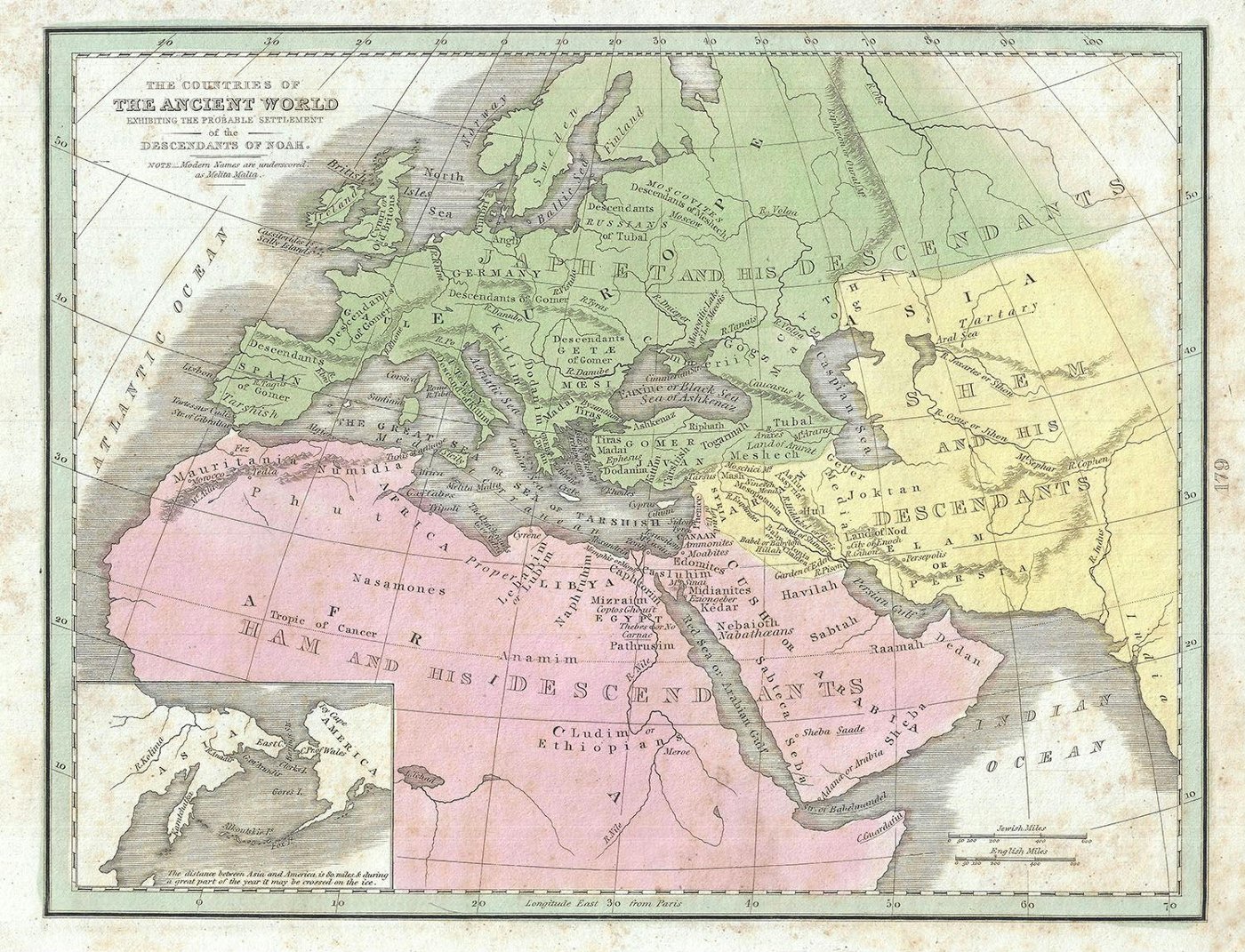

Genesis 10 is a 'map of peoples' — seventy nations descended from Noah's sons Shem, Ham and Japheth, spreading out after the flood. Many of its names are recognisable in the ancient record: Egypt (Mizraim), Asshur (Assyria), the Hittites, Sidon, Javan (the Ionian Greeks). It reads like an ancient world atlas, ordering the known peoples around Israel by kinship. But it is a theological genealogy, not a modern ethnography: it groups nations by ancient relationship and geography, and it does not line up neatly with the language families or genetics of modern science.
- Seventy nations under Shem, Ham and Japheth (Genesis 10).
- Identifiable names include Mizraim (Egypt), Asshur (Assyria), the Hittites, Sidon and Javan (Ionian Greeks).
- It is a theological / kinship genealogy, not a modern ethnographic or genetic map.
What the evidence showsGenesis 10 preserves a genuinely ancient horizon of peoples and places, many of them independently attested — a real memory of the Near-Eastern world, not a random list.
Where it stopsIt is an ancient kinship map, not a modern account of human origins or migration; correlating its names with today's ethnic, linguistic or genetic categories only goes so far, and scholars debate several identifications.
Sources & further reading