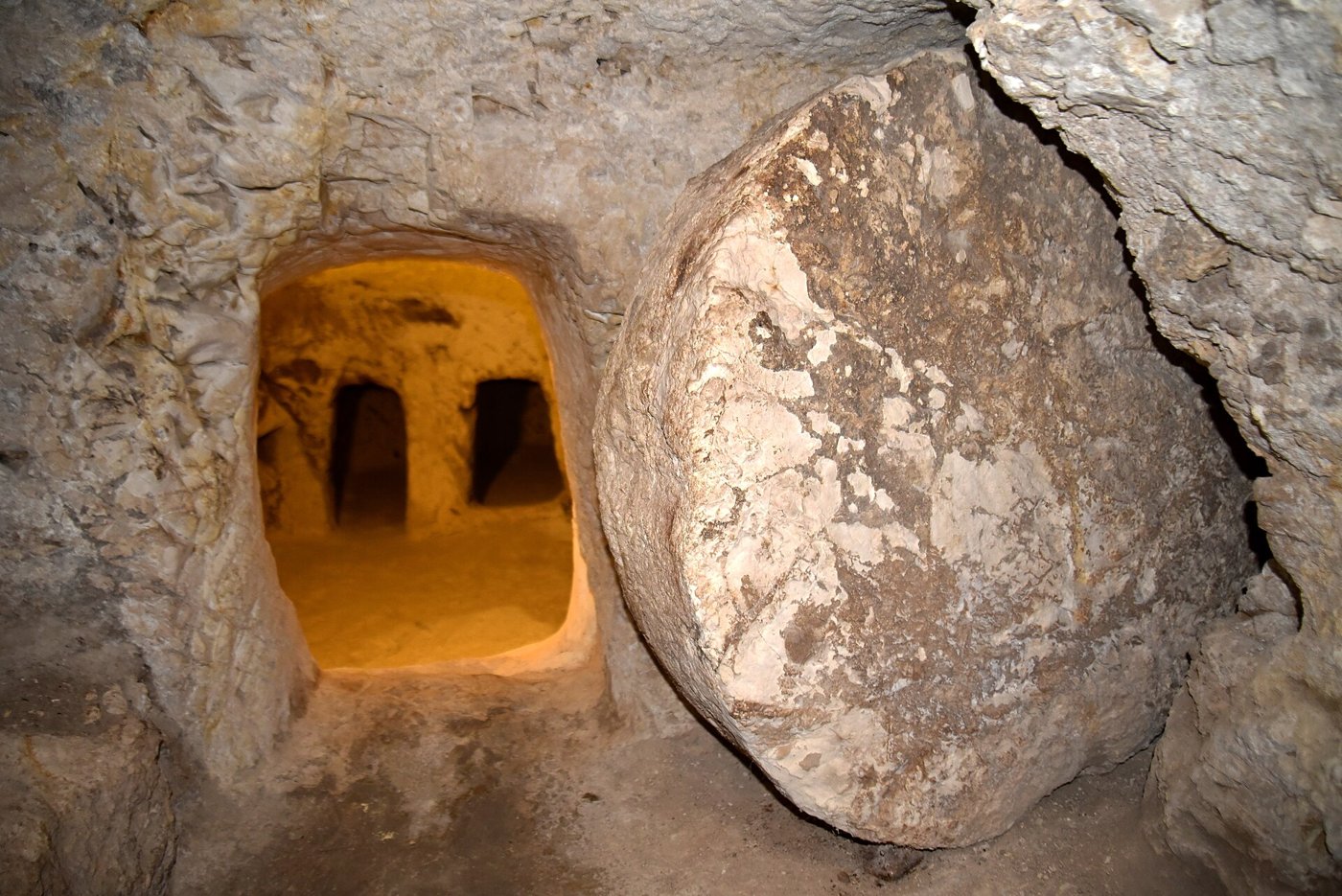
_archaeological_site,_2019_(06).jpg)
যেহেতু পুরাতন নিয়মে, জোসেফাসের লেখায় এবং প্রাথমিক রাব্বিদের লেখায় নাসরতের উল্লেখ নেই, তাই একটি প্রান্তিক দাবি বলে যে যীশুর সময়ে এর অস্তিত্বই ছিল না। কোদাল অন্য কথা বলে: খননকার্যে ঠিক সেখানেই, যেখানে ঐতিহ্য একে স্থাপন করে, প্রথম শতাব্দীর একটি সাধারণ ইহুদি কৃষিগ্রাম পাওয়া গেছে — ঘরের দেয়াল, ভাণ্ডার-গুহা, জলাধার, দ্রাক্ষারস ও জলপাই মাড়াইয়ের যন্ত্র। কৈসরিয়া থেকে পাওয়া পরবর্তীকালের একটি হিব্রু শিলালিপি, যা 70 খ্রিস্টাব্দের পরে যাজক-পরিবারগুলি কোথায় নতুন করে বসতি গড়েছিল তার তালিকা দেয়, এমনকি “নাসরত” নামটিও বানান করে লেখে।
- এটি কী
- প্রথম শতাব্দীর একটি ছোট কৃষিগ্রামের ধ্বংসাবশেষ — ঘরবাড়ি, জলাধার, ধাপ-কাটা জমি ও মাড়াই-যন্ত্র — এবং পরবর্তীকালের একটি শিলালিপি, যাতে শহরটির নাম আছে
- নিদর্শনের কাল
- খ্রিস্টাব্দ 1ম শতাব্দী (গ্রাম); যাজক-পালার শিলালিপিটি খ্রিস্টাব্দ 3য়–4র্থ শতাব্দীর
- আবিষ্কার
- নাসরত, নিম্ন গালীল (গ্রামের ধ্বংসাবশেষ ঘোষণা-গির্জার (চার্চ অফ দ্য অ্যানানসিয়েশন) নিচে ও চারপাশে); শিলালিপিটি কৈসরিয়াতে (বাগাত্তি, স্ট্রেঞ্জ ও অন্যান্যদের খননকার্য)
- এখন কোথায় আছে
- নাসরত, ইস্রায়েল; শিলালিপিটি কৈসরিয়া থেকে
- সম্পর্কিত
- যীশুর নিজের শহর
- ধর্মশাস্ত্র
- মথি 2:23 · লুক 4:16 · যোহন 1:46
এই আবিষ্কার যা দেখায়যে নাসরত প্রথম শতাব্দীতে একটি বাস্তব, জনবসতিপূর্ণ ইহুদি গ্রাম ছিল — এবং এর নাম সুসমাচারগুলি থেকে স্বতন্ত্র ইহুদি নথিতে প্রমাণিত।
এটি যা প্রমাণ করে নাকোনো ঘরকেই মরিয়ম ও যোষেফের ঘর বলে শনাক্ত করা যায় না; আবিষ্কারগুলি শহরটিকে প্রতিষ্ঠা করে, সুসমাচারের কোনো নির্দিষ্ট ঘটনাকে নয়।
বিতর্কিত: মূলধারার প্রত্নতত্ত্ব (এবং ক্রেগ ইভান্স) “নাসরতের কখনও অস্তিত্ব ছিল না” দাবিটিকে দৃঢ়ভাবে প্রত্যাখ্যান করে; সেফোরিস নগরের সঙ্গে নাসরতের নৈকট্যের কারণে, একে এক বিচ্ছিন্ন অনগ্রসর জায়গা হিসেবে দেখার পুরোনো জনপ্রিয় ধারণাটিও এখন সেকেলে।
সূত্র ও আরও পাঠ