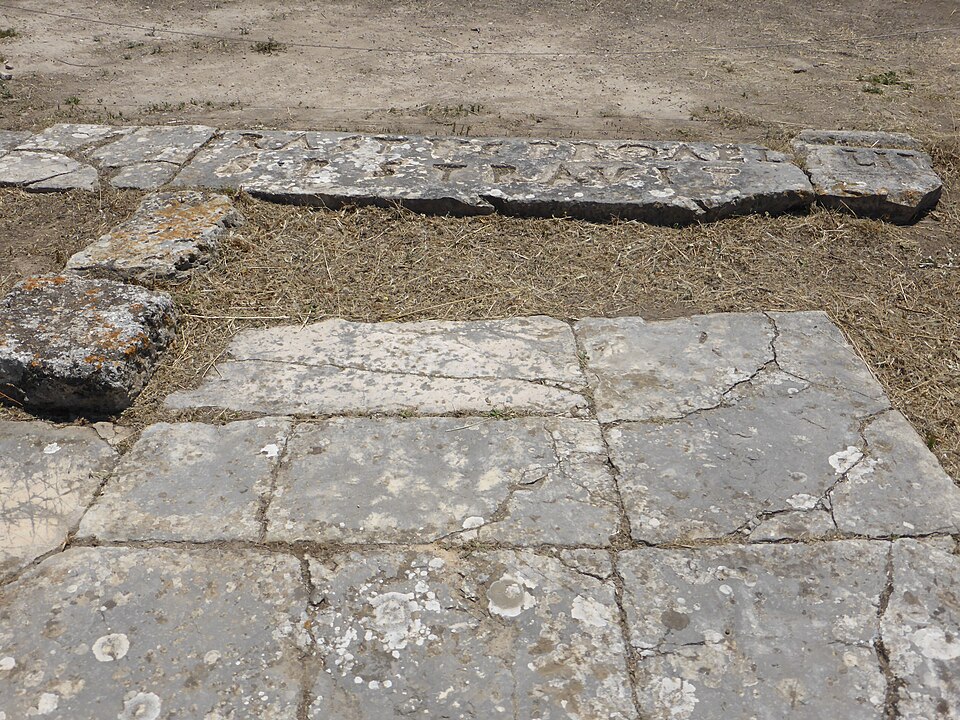

করিন্থ থেকে লিখতে গিয়ে পৌল “নগরের কোষাধ্যক্ষ ইরাস্ত”-এর শুভেচ্ছা পৌঁছে দেন — পৌর পদে থাকা একজন খ্রিস্টান। করিন্থের রঙ্গমঞ্চের পাশের বাঁধানো মেঝেতে খননকারীরা ইরাস্ত নামে একজনের দাতা-শিলালিপি পান, যিনি এডাইল — এক নগর-প্রশাসনিক পদ — নির্বাচিত হয়ে নিজের পকেট থেকে মেঝে বাঁধানোর খরচ দিয়েছিলেন। একই মোটামুটি-বিরল নাম, একই নগর, একই প্রজন্ম, একই নাগরিক ধনসম্পদ। তিনি একই মানুষ হতেই পারেন — আবার না-ও হতে পারেন।
- এটি কী
- একটি পাথরের মেঝে-ফলকে লাতিন শিলালিপি: ইরাস্ত এডাইল-পদের প্রতিদানে নিজের খরচে এই মেঝে বাঁধিয়েছিলেন
- নিদর্শনের কাল
- খ্রিস্টাব্দ 1ম শতাব্দীর মাঝামাঝি (তারিখ বিতর্কিত)
- আবিষ্কার
- করিন্থের রঙ্গমঞ্চের পাশে, গ্রিস, 1929 (আমেরিকান স্কুল (ASCSA)-এর খননকার্য)
- এখন কোথায় আছে
- মূল স্থানে, করিন্থ
- সম্পর্কিত
- ইরাস্ত, করিন্থের নগর-কর্মকর্তা যাঁকে পৌল শুভেচ্ছা জানান
- ধর্মশাস্ত্র
- রোমীয় 16:23 · 2 তীমথিয় 4:20
এই আবিষ্কার যা দেখায়অন্তত এটুকু যে, প্রথম শতাব্দীর করিন্থে পদাধিকারী এক ধনী ইরাস্ত ছিলেন, যা পৌলের শুভেচ্ছাকে ঠিক সেই ধরনের খুঁটিনাটি করে তোলে যা করিন্থ থেকে লেখা একটি প্রকৃত চিঠিতে থাকার কথা।
এটি যা প্রমাণ করে নাশনাক্তকরণটি সত্যিই অনিশ্চিত: পৌলের গ্রিক পদবি (অয়কোনোমস) ও লাতিন এডাইল হয়তো ভিন্ন পদ, ফলকটির সঠিক তারিখ বিতর্কিত, আর নামটি অনন্য ছিল না।
বিতর্কিত: ইনি পৌলের ইরাস্ত কি না তা নিয়ে পণ্ডিতেরা বিভক্ত; মিলটিকে আকর্ষণীয় কিন্তু অপ্রমাণিত বলে গণ্য করুন।