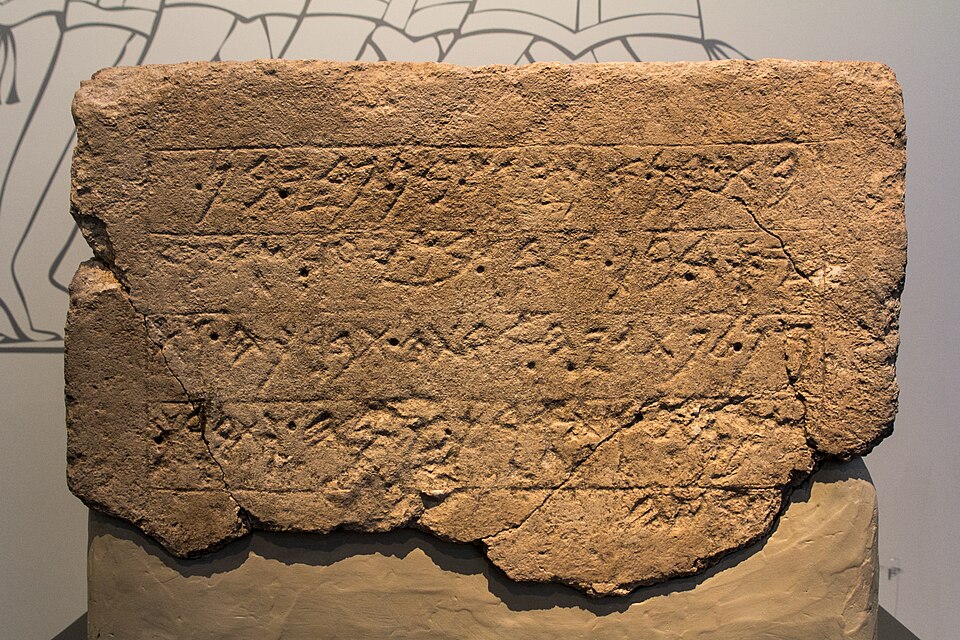

প্রত্নতাত্ত্বিকেরা বহুদিন ধরে যুক্তি দিয়ে আসছিলেন যে তেল মিকনের ঢিবিটিই বাইবেলের ইক্রোণ। তারপর, এর বিশাল মন্দিরের ধ্বংসাবশেষে একটি পাথর পাওয়া গেল যাতে নগরটি নিজের পরিচয় দেয়: এর রাজা পাদির ছেলে আখীশ (ইকাউসু) উপাসনাস্থলটি উৎসর্গ করেন, নিজের পূর্বপুরুষদের ও নিজের নগরের নাম উল্লেখ করে। কোনো স্থান নিজের নাম নিজে জানানোর সুযোগ প্রায় কখনোই পায় না; এটি পেয়েছিল — এবং এর দুজন রাজা অশূরীয় বিবরণেও উপস্থিত, যা কালানুক্রমকে দৃঢ়ভাবে একসঙ্গে বেঁধে দেয়।
- এটি কী
- একজন পলেষ্টীয় রাজার পাথরে খোদাই করা পাঁচ পঙ্ক্তির একটি মন্দির-উৎসর্গ
- নিদর্শনের কাল
- খ্রিস্টপূর্ব 7ম শতাব্দীর শুরু
- আবিষ্কার
- তেল মিকনে, ইস্রায়েল, 1996 (ট্রুডে ডোথান ও সেইমুর গিটিনের খননকার্য)
- এখন কোথায় আছে
- ইস্রায়েল জাদুঘর, যিরূশালেম
- সম্পর্কিত
- পলেষ্টীয় নগর ইক্রোণ ও তার রাজবংশ
- ধর্মশাস্ত্র
- 1 শমূয়েল 5–6 · সফনিয় 2:4
এই আবিষ্কার যা দেখায়তেল মিকনে হল পলেষ্টীয় পঞ্চনগরীর ইক্রোণ; এর রাজারাই সেই রাজা যাঁদের সঙ্গে অশূর লেনদেন করেছিল; এবং 'আখীশ' — দুই শতাব্দী আগের দায়ূদের কাহিনির পলেষ্টীয় রাজকীয় নাম — তখনও রাজবংশে প্রচলিত ছিল।
এটি যা প্রমাণ করে নাএটি ইক্রোণ সম্পর্কে বাইবেলের কোনো নির্দিষ্ট আখ্যান, যেমন 1 শমূয়েলে সিন্দুকের ঘুরে বেড়ানো, স্পর্শ করে না; এটি স্থানটি ও তার শাসকদের ভিত্তি দেয়, সেখানে ঘটা কাহিনিগুলিকে নয়।
সূত্র ও আরও পাঠ