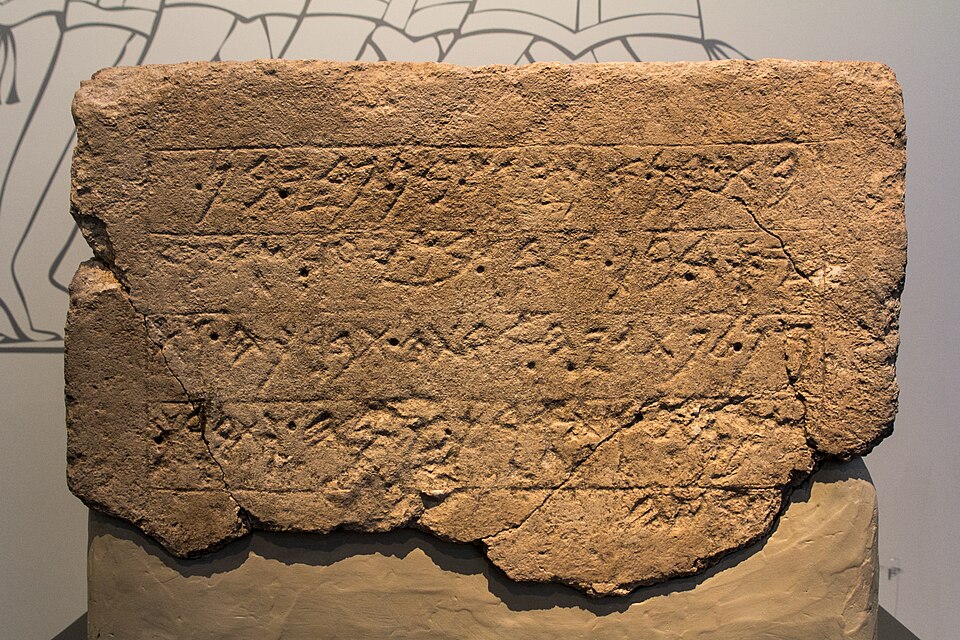

पुरातत्त्वविद लंबे समय से तर्क देते आए थे कि तेल मिक़्ने का टीला बाइबल का एक्रोन है। फिर उसके विशाल मंदिर के खंडहर में एक पत्थर मिला जिस पर नगर स्वयं अपना परिचय देता है: उसका राजा आकीश (इकाउसु), पदी का पुत्र, उस पूजा-स्थल को समर्पित करता है और अपने पूर्वजों और अपने नगर का नाम लेता है। किसी स्थल को अपना नाम स्वयं बताने का अवसर लगभग कभी नहीं मिलता; इसे मिला — और इसके दो राजा अश्शूरी अभिलेखों में भी आते हैं, जिससे कालक्रम आपस में जुड़ जाता है।
- यह क्या है
- एक पलिश्ती राजा द्वारा पत्थर पर खुदवाया गया पाँच पंक्तियों का मंदिर-समर्पण लेख
- वस्तु की तिथि
- 7वीं शताब्दी ईसा पूर्व का आरंभ
- खोज
- तेल मिक़्ने, इस्राएल, 1996 (त्रूदे दोथान और सेमूर गितिन की खुदाई)
- अब यह कहाँ है
- इस्राएल संग्रहालय, यरूशलेम
- संबंधित
- पलिश्ती नगर एक्रोन और उसका राजवंश
- पवित्र-वचन
- 1 शमूएल 5–6 · सपन्याह 2:4
यह खोज क्या दिखाती हैतेल मिक़्ने पलिश्तियों के पाँच नगरों वाला एक्रोन है; इसके राजा वही हैं जिनसे अश्शूर का वास्ता पड़ा; और “आकीश” — दो शताब्दी पहले की दाऊद की कहानी का पलिश्ती राज-नाम — राजवंश में तब भी प्रयोग में था।
यह क्या सिद्ध नहीं करतीयह एक्रोन के बारे में किसी विशिष्ट बाइबली वृत्तांत को नहीं छूता, जैसे 1 शमूएल में भटकता हुआ सन्दूक; यह स्थान और उसके शासकों को आधार देता है, वहाँ घटी कहानियों को नहीं।
स्रोत एवं आगे पढ़ने के लिए