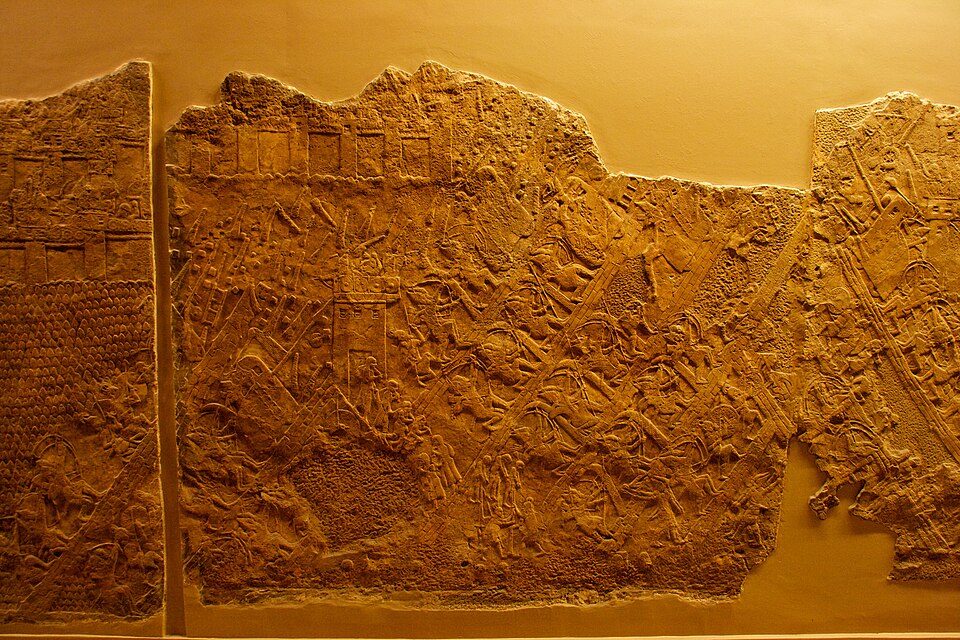

ഒരൊറ്റ യെഹൂദ്യ നഗരത്തിന്റെ ആക്രമണംകൊണ്ട് സൻഹേരീബ് തന്റെ കൊട്ടാരത്തിലെ ഒരു മുറി മുഴുവൻ അലങ്കരിച്ചു: ഉപരോധ ചരിവുകൾ, കോട്ടഭേദന യന്ത്രങ്ങൾ, വില്ലാളികൾ, പ്രവാസത്തിലേക്ക് ആട്ടിയോടിക്കപ്പെടുന്ന കുടുംബങ്ങൾ, തൊലിയുരിക്കപ്പെടുകയും കുന്തത്തിൽ കോർക്കപ്പെടുകയും ചെയ്യുന്ന തടവുകാർ, സിംഹാസനസ്ഥനായി കൊള്ളമുതൽ പരിശോധിക്കുന്ന രാജാവും. ലാഖീശിന്റെ വീഴ്ചയ്ക്കു ബൈബിൾ അര വാക്യമേ നൽകുന്നുള്ളൂ. ഖനനം ചെയ്ത നഗരക്കുന്ന് അതേ കഥ താഴെനിന്നു പറയുന്നു — അശ്ശൂര്യ ഉപരോധ ചരിവ്, ഒരു യെഹൂദ്യ പ്രതിചരിവ്, നൂറുകണക്കിന് അമ്പുമുനകളും കവണക്കല്ലുകളും, കൂട്ടക്കുഴിമാടങ്ങളും.
- ഇത് എന്താണ്
- സൻഹേരീബിന്റെ കൊട്ടാരത്തിൽനിന്നുള്ള, കൊത്തുപണി ചെയ്ത വെണ്ണക്കൽ (അലബാസ്റ്റർ) ഭിത്തിഫലകങ്ങൾ — ഏകദേശം 27 മീറ്റർ നീളത്തിൽ
- വസ്തുവിന്റെ കാലം
- ഏകദേശം ക്രി.മു. 700–681
- കണ്ടെത്തിയത്
- സൻഹേരീബിന്റെ 'എതിരില്ലാത്ത കൊട്ടാരം', നീനെവേ, ഇറാഖ്, 1847 (ഓസ്റ്റെൻ ഹെൻറി ലെയാർഡ്)
- ഇപ്പോൾ എവിടെ
- ബ്രിട്ടീഷ് മ്യൂസിയം, ലണ്ടൻ
- ബന്ധപ്പെട്ടത്
- ക്രി.മു. 701-ൽ യെഹൂദയിലെ രണ്ടാമത്തെ നഗരമായ ലാഖീശിനെ അശ്ശൂർ ഉപരോധിച്ചു പിടിച്ചടക്കിയത്
- തിരുവെഴുത്ത്
- 2 രാജാക്കന്മാർ 18:13–14 · 2 ദിനവൃത്താന്തം 32:9
ഈ കണ്ടെത്തൽ കാണിക്കുന്നത്ക്രി.മു. 701-ലെ പടയോട്ടം, മൂന്നു സാക്ഷികളും — അശ്ശൂര്യ കല, ബൈബിൾ, ഖനനം തന്നെയും — സ്വതന്ത്രമായി വിവരിക്കുന്നതുപോലെ അടിസ്ഥാനപരമായി സംഭവിച്ചു; പ്രാചീന ലോകത്തിലെ ഏറ്റവും നന്നായി രേഖപ്പെടുത്തപ്പെട്ട യുദ്ധങ്ങളിൽ ഒന്നാണ് ഇത്.
ഇതു തെളിയിക്കാത്തത്അശ്ശൂര്യ കൊട്ടാരകല സാമ്രാജ്യത്വ പ്രചാരണമാണ്; അതിന്റെ മഹത്ത്വപ്പെടുത്തുന്ന ശൈലിയും, അതിലെ ഉരുണ്ട സംഖ്യകളെപ്പോലെ, രാജാവിനെ സേവിക്കുന്നു. ഇതു സംഭവത്തെ സ്ഥിരീകരിക്കുന്നു, അതിനെക്കുറിച്ച് ഇരുപക്ഷവും ഉന്നയിച്ച ഓരോ അവകാശവാദത്തെയുമല്ല.
സ്രോതസ്സുകളും കൂടുതൽ വായനയും