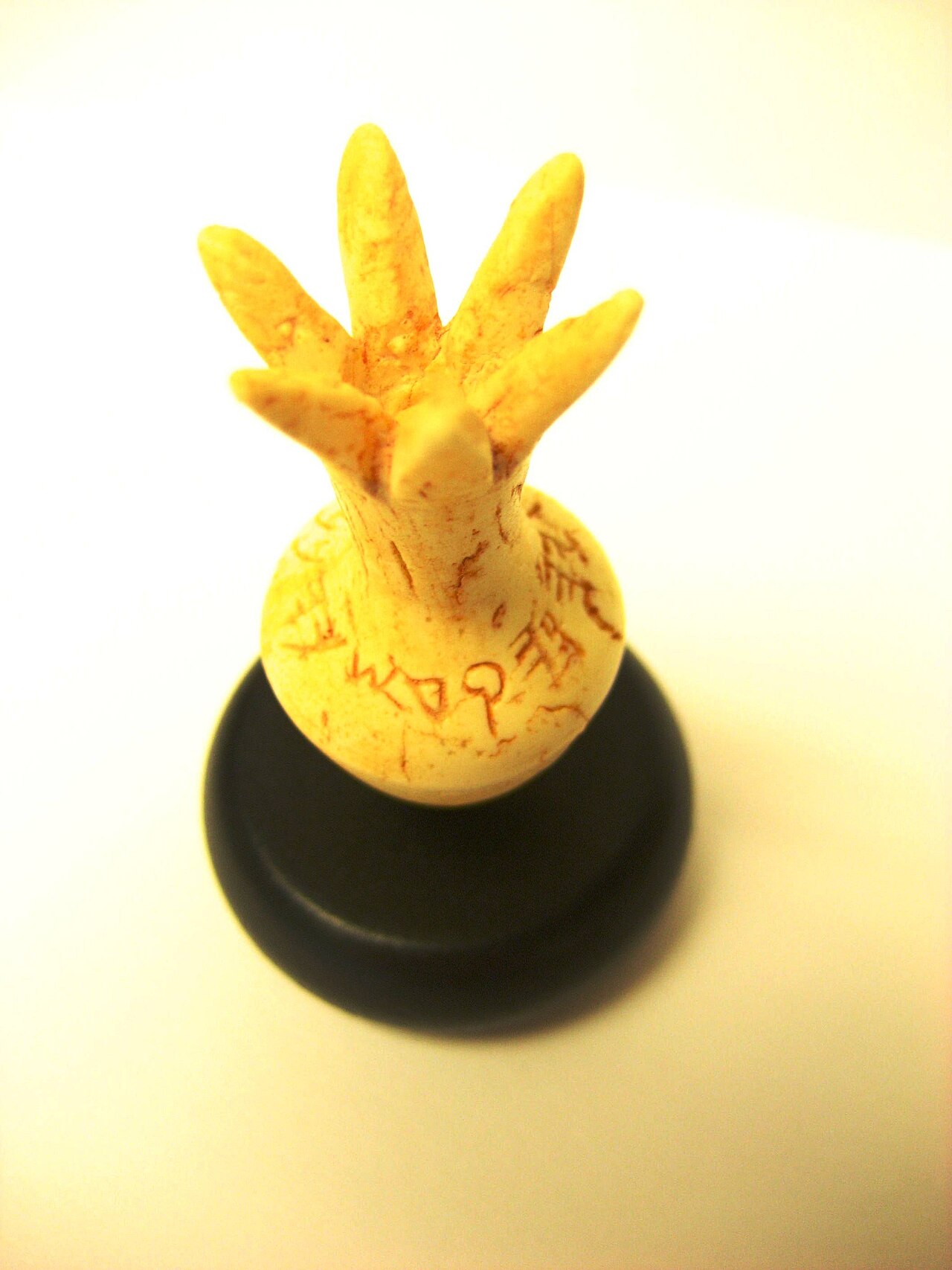

വർഷങ്ങളോളം ഈ കൊച്ചു ദന്തവസ്തു, ശലോമോന്റെ ദൈവാലയവുമായി എന്നെങ്കിലും ബന്ധിപ്പിക്കപ്പെട്ട ഒരേയൊരു തിരുശേഷിപ്പായി ആഘോഷിക്കപ്പെട്ടു: അതിന്റെ കഴുത്തിനു ചുറ്റുമുള്ള മുറിഞ്ഞ ലിഖിതം “യഹോവയുടെ ആലയത്തിന്റേത്, പുരോഹിതന്മാർക്കു വിശുദ്ധം” എന്നു വായിക്കപ്പെട്ടു. ഇസ്രായേൽ മ്യൂസിയം പേരു വെളിപ്പെടുത്താത്ത ഒരു വിൽപ്പനക്കാരനിൽനിന്ന് വലിയ തുകയ്ക്ക് അതു വാങ്ങി. എന്നാൽ — യാക്കോബിന്റെ അസ്ഥിപേടകം പോലെ — അതു കണ്ടെത്തിയ സ്ഥലം അറിയില്ലായിരുന്നു; ഇസ്രായേൽ ആന്റിക്വിറ്റീസ് അതോറിറ്റി അക്ഷരങ്ങൾ ഭൂതക്കണ്ണാടിയിലൂടെ വീണ്ടും പരിശോധിച്ചപ്പോൾ, പ്രധാന വാക്കുകൾ യഥാർഥത്തിൽ പ്രാചീനവും എന്നാൽ ആദ്യം ശൂന്യവുമായിരുന്ന ഒരു മുത്തിൽ ആധുനിക കാലത്തു കൊത്തിയതാണെന്ന നിഗമനത്തിലെത്തി. മറ്റു ലിഖിതശാസ്ത്രജ്ഞർ ഇപ്പോഴും അതിനെ ന്യായീകരിക്കുന്നു. ഈ മേഖല എങ്ങനെ പ്രവർത്തിക്കുന്നു എന്നതിനെക്കുറിച്ചുള്ള ഒരു മുന്നറിയിപ്പായി, തീർപ്പാകാത്ത നിലയിൽ, ഞങ്ങൾ ഇത് ഉൾപ്പെടുത്തുന്നു.
- ഇത് എന്താണ്
- നീർക്കുതിരയുടെ ദന്തത്തിൽ കൊത്തിയെടുത്ത, പെരുവിരലോളം വലുപ്പമുള്ള ഒരു മാതളപ്പഴം; അതിന്റെ തോളിനു ചുറ്റും പുരാതന-എബ്രായ ലിപിയിൽ ഒരു ലിഖിതം
- വസ്തുവിന്റെ കാലം
- ലിഖിതം ക്രി.മു. 8-ാം നൂറ്റാണ്ടിലേതെന്ന് അവകാശപ്പെടുന്നു (ആധികാരികത തർക്കത്തിൽ)
- കണ്ടെത്തിയത്
- അജ്ഞാതം — 1979-ൽ യെരൂശലേമിലെ പുരാവസ്തു വിപണിയിൽ പ്രത്യക്ഷപ്പെട്ടു
- ഇപ്പോൾ എവിടെ
- ഇസ്രായേൽ മ്യൂസിയം, യെരൂശലേം (1988-ൽ സ്വന്തമാക്കി; ലിഖിതം ഇപ്പോൾ തർക്കത്തിലാണ്)
- ബന്ധപ്പെട്ടത്
- ഒരുപക്ഷേ ശലോമോന്റെ ദൈവാലയത്തിലെ ഒരു അലങ്കാരഭാഗം — “യഹോവയുടെ ആലയത്തിലെ പുരോഹിതന്മാർക്കു വിശുദ്ധം” എന്നു വായിക്കപ്പെടുന്നു
- തിരുവെഴുത്ത്
- 1 രാജാക്കന്മാർ 6–7 · 2 ദിനവൃത്താന്തം 3–4