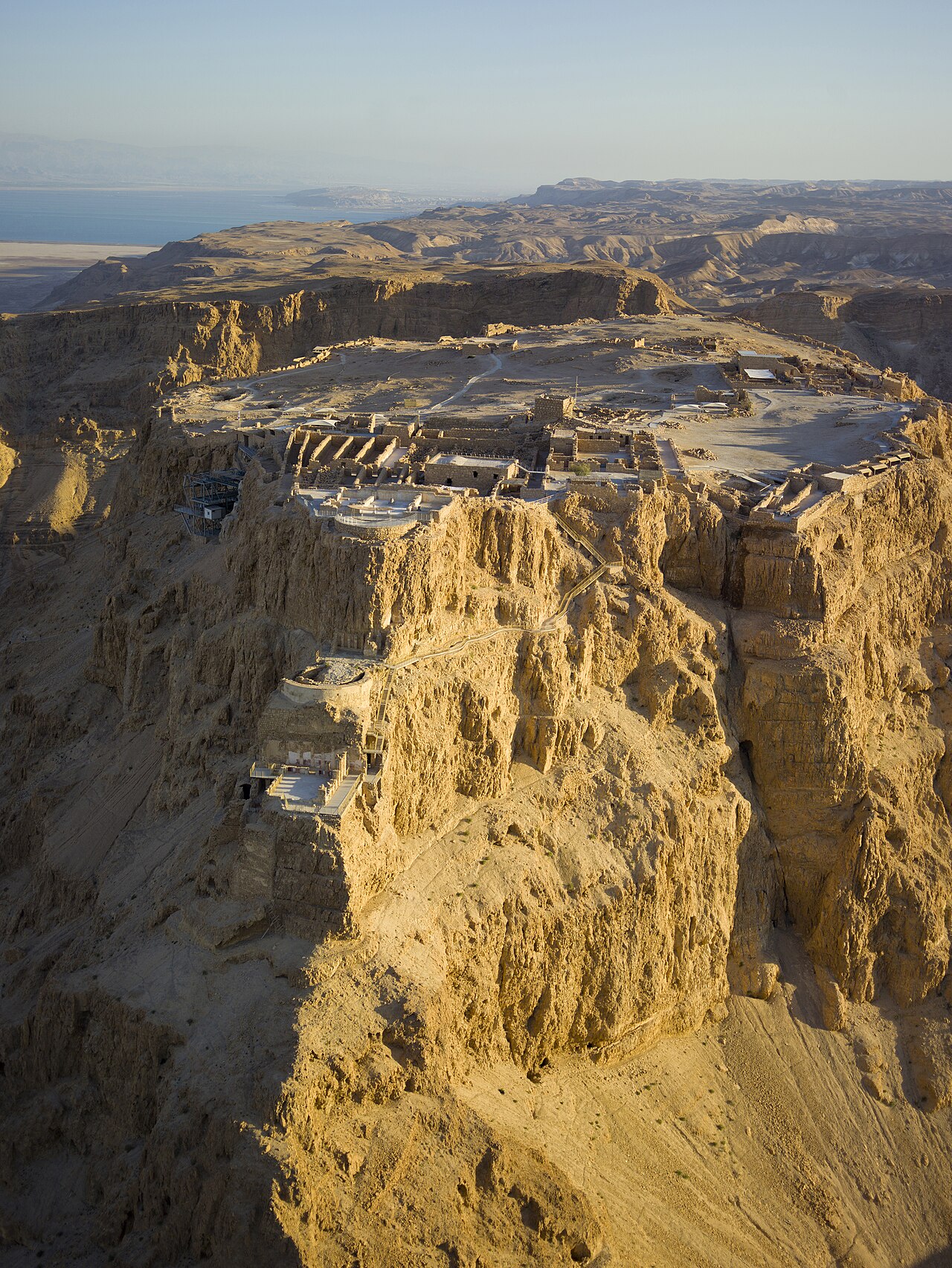

হেরোদ মরুভূমির এক বিচ্ছিন্ন সমতল-শীর্ষ পাহাড়কে একটি জাঁকালো আশ্রয়স্থলে পরিণত করেছিলেন; তাঁর উত্তর প্রাসাদটি তিনটি ধাপে খাড়া পাহাড় বেয়ে নেমে গেছে। এক শতাব্দী পরে এটি ছিল ইহুদি বিদ্রোহের শেষ ঘাঁটি, যার সমাপ্তি ঘটে — জোসেফাসের ভাষ্য অনুযায়ী — গণ-আত্মহত্যায়, যখন রোম প্রাচীর ভেঙে ঢুকে পড়ে। আমাদের উদ্দেশ্যে এর নীরব সম্পদ হল বেঞ্চ-বসানো একটি সাধারণ হলঘর, যা বিদ্রোহীরা সমাজগৃহ হিসেবে ব্যবহার করত: নিশ্চিতভাবে 70 খ্রিস্টাব্দের আগের বলে তারিখ-নির্ধারিত এই ঘরটি যীশুর যুগের একটি সমাজগৃহ-ভবন আসলে দেখতে কেমন ছিল, তার স্পষ্টতম উদাহরণগুলির একটি।
- এটি কী
- মরুভূমিতে খাড়া পাহাড়ের চূড়ায় একটি দুর্গ — ধাপে ধাপে নির্মিত প্রাসাদ, রোমান স্নানাগার, ভাণ্ডারঘর, জলাধার এবং জ্ঞাত প্রাচীনতম সমাজগৃহগুলির একটি সহ
- নিদর্শনের কাল
- নির্মিত আনু. খ্রিস্টপূর্ব 40–30 সালে; ইহুদি বিদ্রোহ এখানে শেষ হয় 73 খ্রিস্টাব্দে
- আবিষ্কার
- মৃত সাগরের পশ্চিম তীরের ওপরে একটি পাথুরে মালভূমি, 1963 (য়িগায়েল ইয়াদিনের খননকার্য)
- এখন কোথায় আছে
- মাসাদা জাতীয় উদ্যান, ইস্রায়েল
- সম্পর্কিত
- হেরোদের নির্মাণকাজ এবং রোমের বিরুদ্ধে ইহুদি যুদ্ধ
এই আবিষ্কার যা দেখায়হেরোদের দুর্গ ও বিদ্রোহের সমাপ্তি সম্পর্কে জোসেফাসের বিবরণ, এবং — গুরুত্বপূর্ণভাবে — প্রথম শতাব্দীতে বিশেষভাবে নির্মিত সমাজগৃহের অস্তিত্ব।
এটি যা প্রমাণ করে নানতুন নিয়মে মাসাদার নাম কোথাও নেই; এর মূল্য প্রেক্ষাপট হিসেবে, সুসমাচারের কোনো ঘটনা হিসেবে নয়।
বিতর্কিত: ইয়াদিনের নাটকীয় গণ-আত্মহত্যার বিবরণকে পরবর্তী পণ্ডিতেরা প্রশ্নবিদ্ধ করেছেন; তবে দুর্গটি ও তার সমাজগৃহের প্রত্নতত্ত্ব নিয়ে কোনো সন্দেহ নেই।
সূত্র ও আরও পাঠ