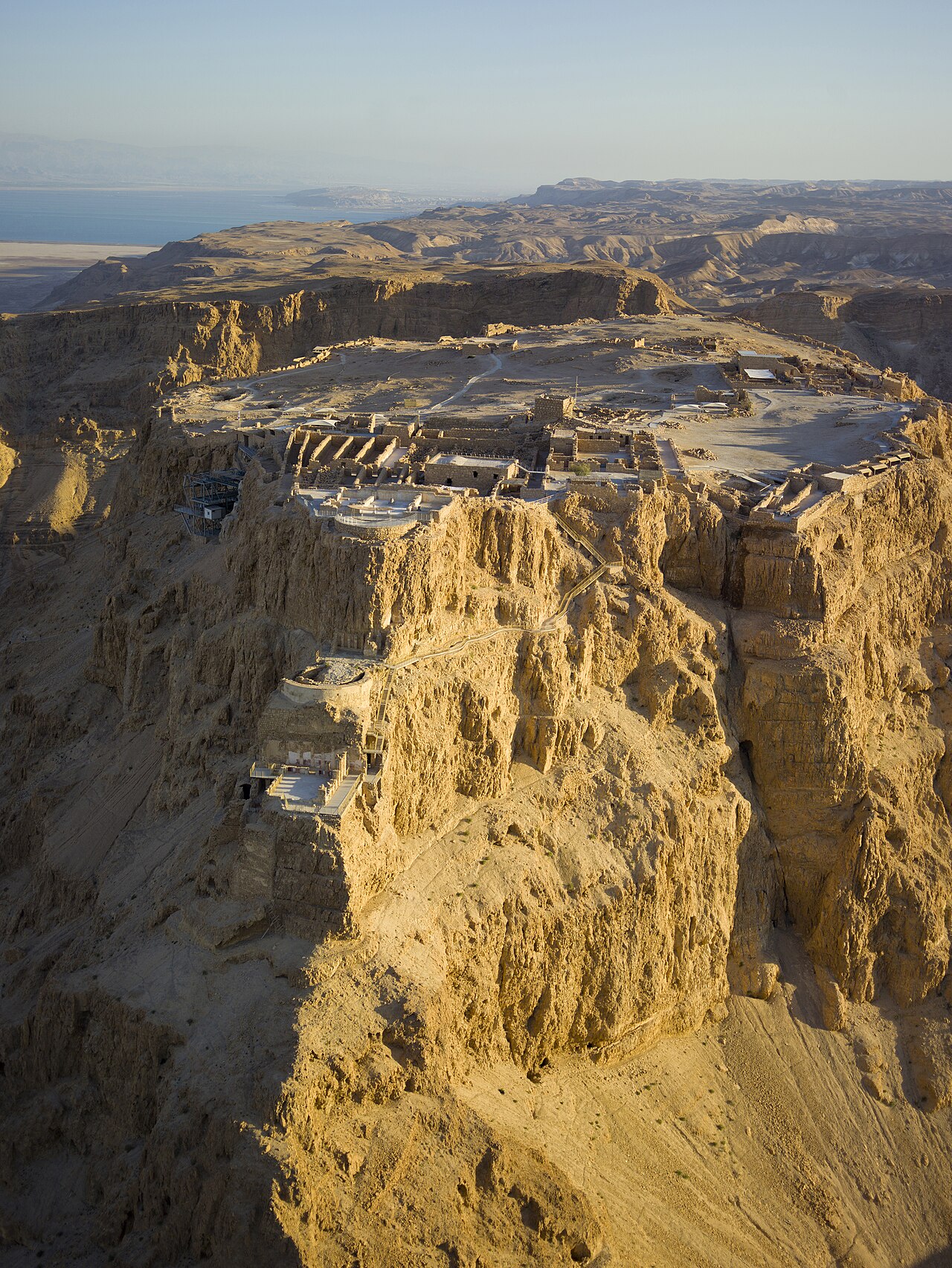

हेरोदेस ने एक अलग-थलग मरुस्थलीय पठार को एक भव्य शरण-स्थान में बदल दिया, जिसका उत्तरी महल तीन सीढ़ियों में चट्टान से नीचे उतरता है। एक शताब्दी बाद यह यहूदी विद्रोह का अंतिम गढ़ बना, जिसका अंत — योसेफ़स के अनुसार — सामूहिक आत्महत्या में हुआ जब रोम ने दीवार तोड़ दी। हमारे उद्देश्य के लिए इसका शांत ख़ज़ाना एक साधारण, बेंचों वाला कक्ष है जिसे विद्रोही आराधनालय के रूप में प्रयोग करते थे: यह निश्चित रूप से 70 ईस्वी से पहले का है, और यह इस बात के सबसे स्पष्ट उदाहरणों में से एक है कि यीशु के युग का एक आराधनालय-भवन वास्तव में कैसा दिखता था।
- यह क्या है
- चट्टान की चोटी पर बना एक मरुस्थलीय किला, जिसमें सीढ़ीदार महल, रोमी स्नानागार, भंडार-कक्ष, कुंड और अब तक ज्ञात सबसे पुराने आराधनालयों में से एक है
- वस्तु की तिथि
- लगभग 40–30 ईसा पूर्व में निर्मित; यहूदी विद्रोह का अंत यहीं 73 ईस्वी में हुआ
- खोज
- मृत सागर के पश्चिमी तट के ऊपर एक चट्टानी पठार, 1963 (यिगाएल यादीन की खुदाई)
- अब यह कहाँ है
- मसादा राष्ट्रीय उद्यान, इस्राएल
- संबंधित
- हेरोदेस के निर्माण-कार्य और रोम के विरुद्ध यहूदी युद्ध
यह खोज क्या दिखाती हैहेरोदेस के किले और विद्रोह के अंत के बारे में योसेफ़स का वृत्तांत, और — महत्वपूर्ण रूप से — पहली शताब्दी में विशेष रूप से बनाए गए आराधनालयों का अस्तित्व।
यह क्या सिद्ध नहीं करतीनए नियम में मसादा का नाम कहीं नहीं आता; इसका महत्व पृष्ठभूमि में है, किसी सुसमाचार-प्रसंग में नहीं।
विवादित: यादीन की नाटकीय सामूहिक-आत्महत्या वाली कथा पर बाद के विद्वानों ने प्रश्न उठाए हैं; किले और उसके आराधनालय के पुरातत्व पर कोई संदेह नहीं है।
स्रोत एवं आगे पढ़ने के लिए