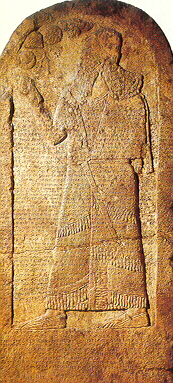

খ্রিস্টপূর্ব 853 সালে লেভান্তের প্রায় বারোজন রাজা একজোট হয়ে সিরিয়ার কর্করে অশূরীয় সেনাবাহিনীকে থামাতে চেয়েছিলেন। শত্রুপক্ষের তালিকা লিখতে গিয়ে শলমনেষরের লেখকেরা লিপিবদ্ধ করেন যে 'ইস্রায়েলীয় আহাব' জোটের সবচেয়ে বড় রথবাহিনীগুলির একটি নিয়ে এসেছিলেন। বাইবেল কখনও এই যুদ্ধের কথা বলে না — আর অশূরও কখনও অরামের সঙ্গে আহাবের সেই যুদ্ধগুলির কথা বলে না যা বাইবেল বর্ণনা করে — তবু দুটি চিত্র মেলে: ঠিক এই দশকগুলিতে একটি ধনী, সামরিকভাবে শক্তিশালী উত্তরের রাজ্য।
- এটি কী
- কর্করের যুদ্ধের বিবরণসহ তৃতীয় শলমনেষরের অশূরীয় স্তম্ভ, কিউনিফর্ম লিপিতে
- নিদর্শনের কাল
- আনু. খ্রিস্টপূর্ব 852
- আবিষ্কার
- কুর্খ (উচতেপে), দক্ষিণ-পূর্ব তুরস্ক, 1861 (জন জর্জ টেলর)
- এখন কোথায় আছে
- ব্রিটিশ মিউজিয়াম, লন্ডন
- সম্পর্কিত
- ইস্রায়েলের রাজা আহাব, অশূরের বিরুদ্ধে যুদ্ধ করা জোটের একজন সদস্য হিসেবে নাম-করা
- ধর্মশাস্ত্র
- 1 রাজাবলি 16–22
এই আবিষ্কার যা দেখায়আহাব খ্রিস্টপূর্ব নবম শতাব্দীর মাঝামাঝি ইস্রায়েলের একজন বাস্তব রাজা ছিলেন, আন্তর্জাতিক যুদ্ধে গুরুত্ব পাওয়ার মতো যথেষ্ট শক্তিশালী — তাঁর রাজত্বকালের বাইবেলীয় কালানুক্রমের স্বাধীন সমর্থন।
এটি যা প্রমাণ করে নাএটি আহাব সম্পর্কে বাইবেলের কোনো ঘটনা — ঈষেবল, এলিয়, নাবোতের আঙুর-খেত — যাচাই করে না, এবং রথের সংখ্যা (2,000) অতিরঞ্জন বা লিপিকরের ভুল বলে ব্যাপকভাবে সন্দেহ করা হয়।
সূত্র ও আরও পাঠ