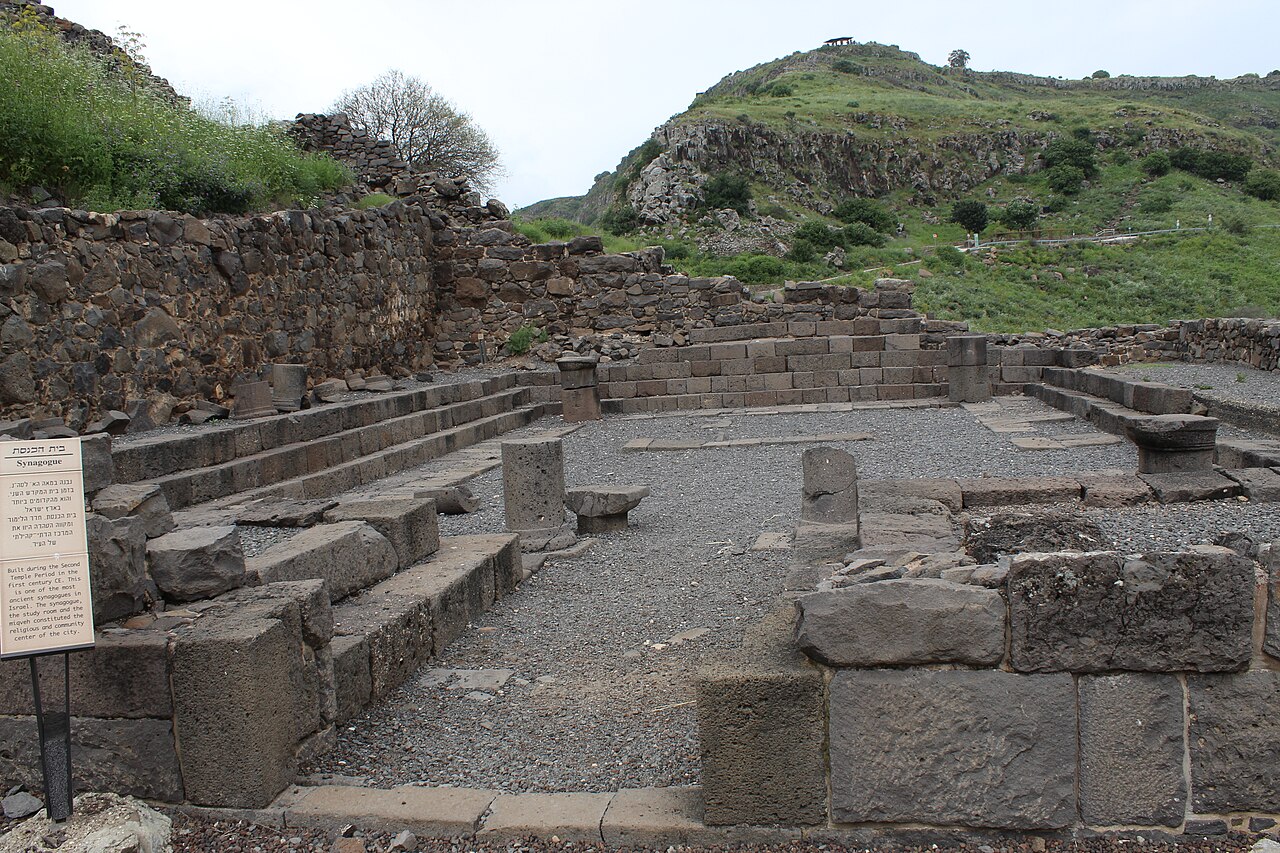

পুরোনো পণ্ডিতেরা সন্দেহ করতেন, যীশুর সময়ে বিশেষভাবে নির্মিত সমাজগৃহের আদৌ অস্তিত্ব ছিল কি না। তারপর ভবনগুলিই সামনে এল: গামলায় বেঞ্চ-বসানো একটি হলঘর, যা 67 খ্রিস্টাব্দে রোম ধ্বংস করে; মগ্দলায় প্রথম শতাব্দীর একটি সমাজগৃহ, যেখানে মন্দিরের মেনোরা খোদাই করা একটি পাথর আছে; এবং যিরূশালেম থেকে পাওয়া একটি গ্রিক শিলালিপি, যাতে থিওডোটোস নামে একজন লিপিবদ্ধ করেছেন যে তিনি “ব্যবস্থা পাঠের জন্য” একটি সমাজগৃহ নির্মাণ করেছিলেন, সঙ্গে পথিকদের থাকার ব্যবস্থাও। দেখা গেল, গালীলের সমাজগৃহগুলিতে যীশুর শিক্ষাদানের যে ছবি সুসমাচারগুলি আঁকে, তা বাস্তব স্থাপত্যের ওপর দাঁড়িয়ে আছে।
- এটি কী
- গামলা ও মগ্দলায় 70 খ্রিস্টাব্দের আগের সমাজগৃহ-ভবন (মগ্দলারটিতে মেনোরা খোদাই করা একটি “মগ্দলা শিলা” আছে), এবং যিরূশালেমের একটি সমাজগৃহের গ্রিক উৎসর্গ-শিলালিপি
- নিদর্শনের কাল
- খ্রিস্টপূর্ব 1ম শতাব্দী – 70 খ্রিস্টাব্দ
- আবিষ্কার
- গামলা (গোলান), মগ্দলা (গালীল সাগর), এবং যিরূশালেমের দায়ূদ-নগর (শিলালিপিটি, পাওয়া যায় 1913 সালে) (বিভিন্ন খননকার্য; মগ্দলার সমাজগৃহটি 2009 সালে)
- এখন কোথায় আছে
- মূল স্থানে; থিওডোটোস শিলালিপিটি যিরূশালেমের রকফেলার মিউজিয়ামে
- সম্পর্কিত
- যে সমাজগৃহ-ভবনগুলিতে যীশু ও পৌল শিক্ষা দিয়েছিলেন বলে সুসমাচারগুলি ও প্রেরিতদের কার্য্য ধরে নেয়
- ধর্মশাস্ত্র
- মার্ক 1:21 · লুক 4:16 · প্রেরিতদের কার্য্য 15:21
এই আবিষ্কার যা দেখায়যে সমাজগৃহ-ভবন — ব্যবস্থা পাঠ এবং “সমাজগৃহের অধ্যক্ষদের” সমেত — 70 খ্রিস্টাব্দের আগে যিহূদিয়া ও গালীল জুড়ে বিদ্যমান ছিল, ঠিক যেমন সুসমাচারগুলি ও প্রেরিতদের কার্য্য বর্ণনা করে।
এটি যা প্রমাণ করে নাএগুলির কোনোটিকেই যীশু নিজে ব্যবহার করেছিলেন এমন ভবন বলে দেখানো যায় না; এগুলি প্রতিষ্ঠানটিকে প্রতিষ্ঠিত করে, কোনো নির্দিষ্ট দৃশ্যকে নয়।
বিতর্কিত: 70 খ্রিস্টাব্দের আগে কোনো সমাজগৃহ-ভবন ছিল না (এবং থিওডোটোস শিলাটি পরবর্তীকালের) — এই দাবিটি এখন শিলালিপিবিদ্যা ও স্তরবিন্যাসের ভিত্তিতে প্রায় সব পণ্ডিতই প্রত্যাখ্যান করেন।