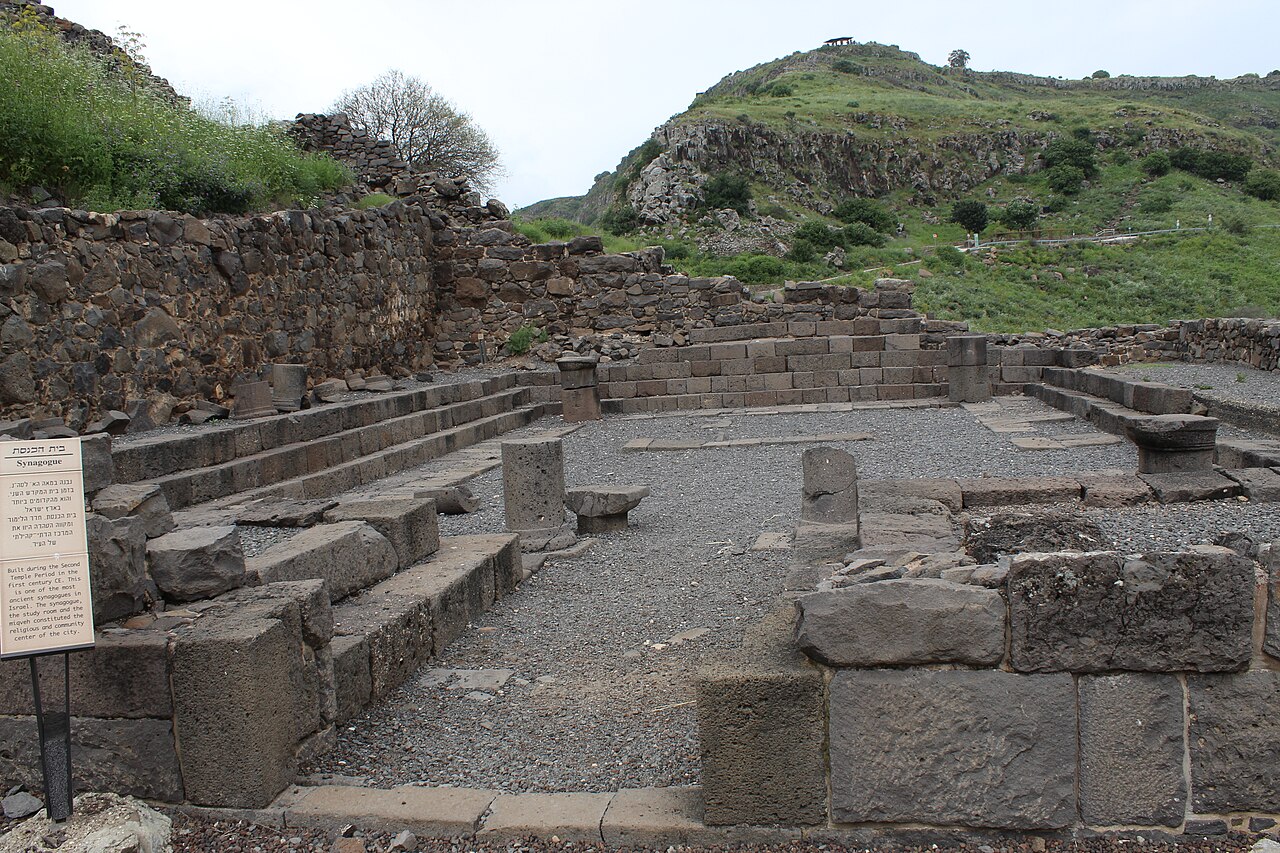

पुराने विद्वानों को संदेह था कि यीशु के दिनों में विशेष रूप से बनाए गए आराधनालय अस्तित्व में भी थे। फिर भवन सामने आए: गमला में बेंचों वाला एक कक्ष, जिसे 67 ईस्वी में रोम ने नष्ट किया; मगदला में पहली शताब्दी का एक आराधनालय, जिसमें मंदिर की दीवट दर्शाती एक नक्काशीदार शिला है; और यरूशलेम से एक यूनानी शिलालेख, जिसमें थियोडोटस नाम का एक व्यक्ति दर्ज करता है कि उसने 'व्यवस्था के पढ़े जाने के लिए' एक आराधनालय बनवाया, जिसमें यात्रियों के ठहरने की व्यवस्था भी थी। गलील के आराधनालयों में यीशु के शिक्षा देने का सुसमाचारों का चित्र वास्तविक स्थापत्य पर टिका हुआ निकलता है।
- यह क्या है
- गमला और मगदला में 70 ईस्वी से पहले के आराधनालय-भवन (मगदला वाले में दीवट से अंकित एक नक्काशीदार 'मगदला शिला' है), और साथ ही यरूशलेम के एक आराधनालय से मिला यूनानी भाषा का एक समर्पण-शिलालेख
- वस्तु की तिथि
- पहली शताब्दी ईसा पूर्व – 70 ईस्वी
- खोज
- गमला (गोलान), मगदला (गलील की झील), और दाऊदपुर, यरूशलेम (शिलालेख, 1913 में मिला) (विभिन्न खुदाइयाँ; मगदला का आराधनालय 2009 में)
- अब यह कहाँ है
- मूल स्थान पर; थियोडोटस शिलालेख रॉकफ़ेलर संग्रहालय, यरूशलेम में
- संबंधित
- वे आराधनालय-भवन जिनमें सुसमाचार और प्रेरितों के काम मानकर चलते हैं कि यीशु और पौलुस ने शिक्षा दी
- पवित्र-वचन
- मरकुस 1:21 · लूका 4:16 · प्रेरितों के काम 15:21
यह खोज क्या दिखाती हैकि आराधनालय-भवन — व्यवस्था के पढ़े जाने और 'आराधनालय के सरदारों' के साथ — 70 ईस्वी से पहले पूरे यहूदिया और गलील में अस्तित्व में थे, ठीक वैसे ही जैसे सुसमाचार और प्रेरितों के काम वर्णन करते हैं।
यह क्या सिद्ध नहीं करतीइनमें से किसी को भी ऐसा भवन सिद्ध नहीं किया जा सकता जिसका यीशु ने स्वयं प्रयोग किया हो; ये संस्था को स्थापित करते हैं, किसी विशेष दृश्य को नहीं।
विवादित: यह दावा कि 70 ईस्वी से पहले कोई आराधनालय-भवन नहीं थे (और कि थियोडोटस शिला बाद की है) अब लगभग सभी विद्वानों द्वारा अभिलेख-विज्ञान और स्तर-विज्ञान के आधार पर अस्वीकार किया जाता है।
स्रोत एवं आगे पढ़ने के लिए