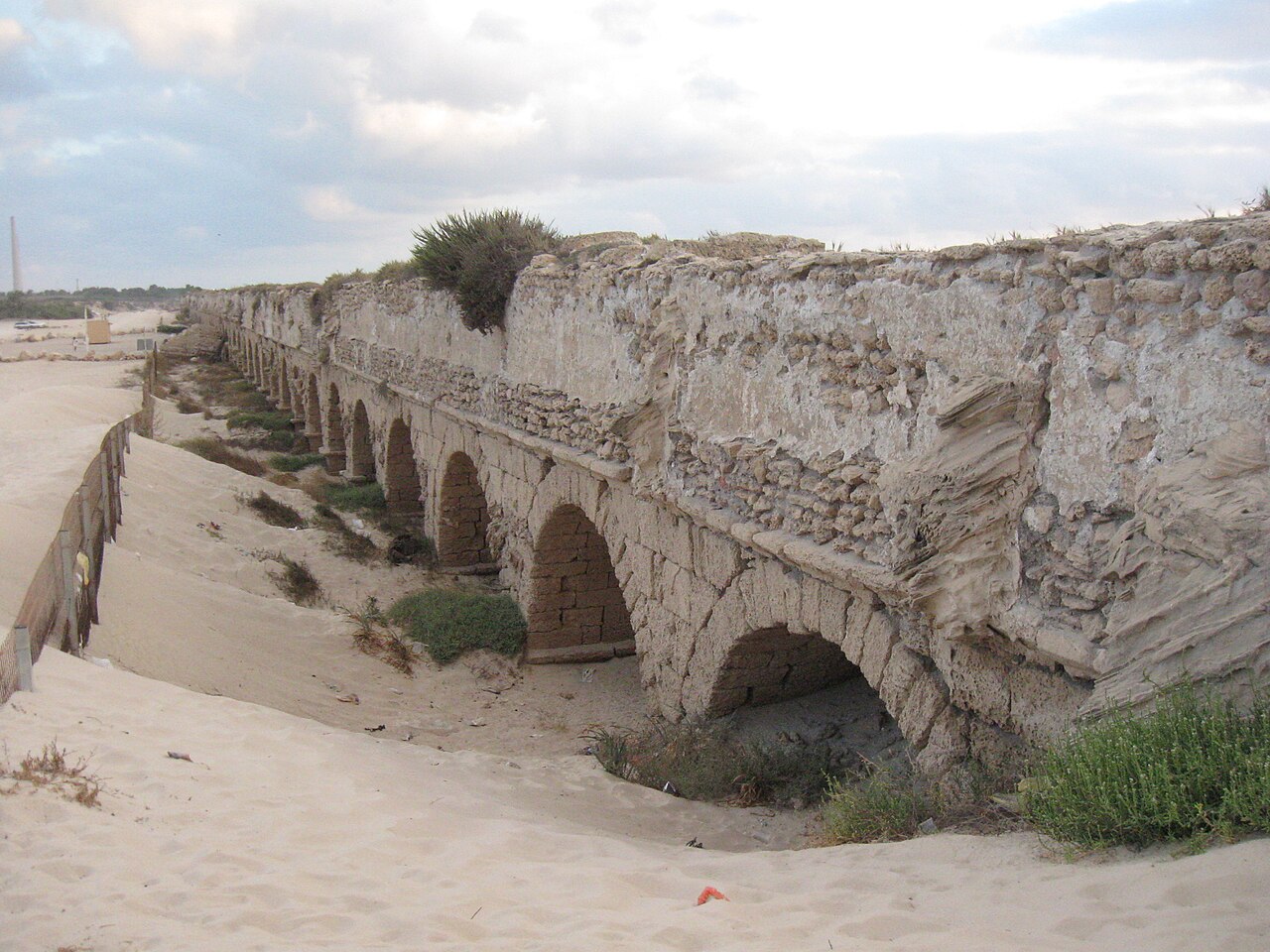

हेरोदेस ने खुले समुद्र में एक पूरा बंदरगाह ढाल दिया: जहाँ कोई प्राकृतिक खाड़ी नहीं थी वहाँ बंदरगाह बनाने के लिए उसने पानी के नीचे जमने वाला हाइड्रोलिक कंक्रीट डुबोया, और उसके चारों ओर एक चमचमाता रोमी नगर बसाया। यह रोमी यहूदिया की प्रशासनिक राजधानी बना — जहाँ पिलातुस वास्तव में रहता था (उसका शिलालेख इसके रंगमंच में मिला), जहाँ पतरस ने सूबेदार कुरनेलियुस को बपतिस्मा दिया, और जहाँ पौलुस बंदी रहे और उन्होंने राज्यपालों और एक राजा के सामने अपना बचाव प्रस्तुत किया।
- यह क्या है
- हेरोदेस महान का कृत्रिम गहरे-पानी का बंदरगाह और रोमी बंदरगाह-नगर — तरंगरोधी बाँध, गोदाम, औगुस्तुस का एक मंदिर और एक जलसेतु
- वस्तु की तिथि
- लगभग 22–10 ईसा पूर्व में निर्मित
- खोज
- इस्राएल का भूमध्यसागरीय तट, तेल अवीव और हाइफ़ा के बीच (1960 और 70 के दशक से स्थल और जल के नीचे खुदाइयाँ)
- अब यह कहाँ है
- कैसरिया राष्ट्रीय उद्यान और तट से दूर डूबा हुआ बंदरगाह
- संबंधित
- यहूदिया की रोमी राजधानी — पिलातुस का शासन-केंद्र, और प्रेरितों के काम की पुस्तक का एक केंद्र
- पवित्र-वचन
- प्रेरितों के काम 10 · प्रेरितों के काम 23:23–35 · प्रेरितों के काम 25:1–13
यह खोज क्या दिखाती हैकि हेरोदेस की महान बंदरगाह-राजधानी वर्णन के अनुसार मौजूद थी, प्रेरितों के काम के एक बड़े भाग का बना-बनाया मंच — और उस पिलातुस का मुख्य ठिकाना जिसने यीशु का मुक़दमा सुना।
यह क्या सिद्ध नहीं करतीनगर दृश्य की पृष्ठभूमि रचता है; वह अपने आप में वहाँ वर्णित किसी एक प्रसंग को सत्यापित नहीं करता।
स्रोत एवं आगे पढ़ने के लिए