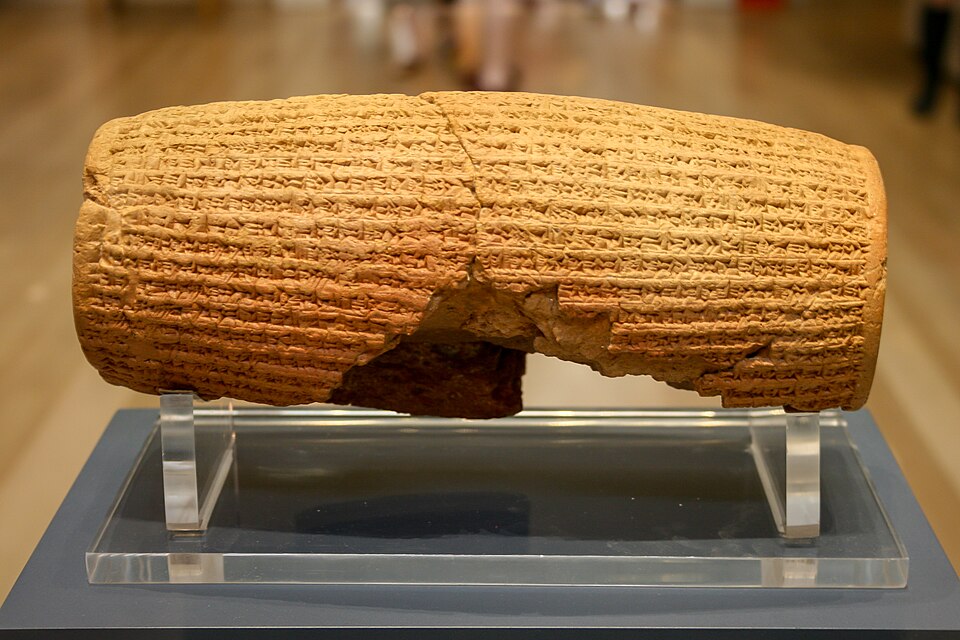

യുദ്ധം കൂടാതെ ബാബേൽ പിടിച്ചടക്കിയശേഷം, കീഴടക്കിയ നഗരത്തിന്റെ സ്വന്തം ഭാഷയിലും ദൈവശാസ്ത്രത്തിലും കോരെശ് ഒരു വിളംബരം പുറപ്പെടുവിച്ചു: താൻ വിമോചകനായിട്ടാണ് വന്നത്; സ്ഥാനഭ്രഷ്ടരായ ജനതകളെയും അവരുടെ ദേവപ്രതിമകളെയും അവയുടെ ആരാധനാസ്ഥലങ്ങളിലേക്കു തിരികെ എത്തിക്കും. യെഹൂദയെ പരാമർശിക്കുന്നില്ല — സിലിണ്ടറിലെ ഉദാഹരണങ്ങൾ മെസൊപ്പൊട്ടേമിയൻ ആണ് — എന്നാൽ അതു പ്രഖ്യാപിക്കുന്ന നയം, യെഹൂദ പ്രവാസികളിലേക്ക് എത്തിയെന്ന് എസ്രാ പുസ്തകം പറയുന്ന അതേ നയമാണ്: സ്വദേശത്തേക്കു മടങ്ങുക, നിങ്ങളുടെ ദൈവത്തിന്റെ ആലയം പുനർനിർമ്മിക്കുക.
- ഇത് എന്താണ്
- മഹാനായ കോരെശിന്റെ, ബാബിലോണിയൻ ക്യൂണിഫോം ലിപിയിലുള്ള, വീപ്പയുടെ ആകൃതിയിലുള്ള ഒരു കളിമൺ അടിസ്ഥാന-രേഖ
- വസ്തുവിന്റെ കാലം
- ക്രി.മു. 539–538
- കണ്ടെത്തിയത്
- ബാബേലിലെ മർദൂക്ക് ആരാധനാലയ വളപ്പ്, 1879 (ഹോർമുസ്ദ് റസ്സാം)
- ഇപ്പോൾ എവിടെ
- ബ്രിട്ടീഷ് മ്യൂസിയം, ലണ്ടൻ
- ബന്ധപ്പെട്ടത്
- ബന്ദികളാക്കപ്പെട്ട ജനതകളെയും അവരുടെ ദേവന്മാരെയും സ്വദേശത്തേക്കു തിരിച്ചയയ്ക്കുന്ന കോരെശിന്റെ നയം — പ്രവാസത്തിൽനിന്നുള്ള മടങ്ങിവരവിന്റെ പശ്ചാത്തലം
- തിരുവെഴുത്ത്
- എസ്രാ 1:1–4 · യെശയ്യാവ് 44:28–45:13
ഈ കണ്ടെത്തൽ കാണിക്കുന്നത്സ്വദേശത്തേക്കുള്ള തിരിച്ചയയ്ക്കലും ആരാധനാലയ പുനരുദ്ധാരണവും കോരെശ് യഥാർഥത്തിൽ സാമ്രാജ്യ നയമായി നടപ്പാക്കിയിരുന്നു; അതിനാൽ എസ്രാ 1-ലെ കൽപ്പന അദ്ദേഹത്തിന്റെ ഭരണത്തിനും കാലഘട്ടത്തിനും പൂർണമായും സ്വഭാവികമാണ്.
ഇതു തെളിയിക്കാത്തത്സിലിണ്ടർ യെഹൂദന്മാരെയോ യെരൂശലേമിനെയോ ദൈവാലയത്തെയോ ഒരിക്കലും പേരെടുത്തു പറയുന്നില്ല; അത് എസ്രാ 1-ലെ കൽപ്പനയല്ല, അതിന്റെ വാക്കുകൾ സ്ഥിരീകരിക്കാനും അതിനു കഴിയില്ല — അതു നയത്തെയാണു കാണിക്കുന്നത്, പ്രത്യേക രേഖയെയല്ല.
സ്രോതസ്സുകളും കൂടുതൽ വായനയും