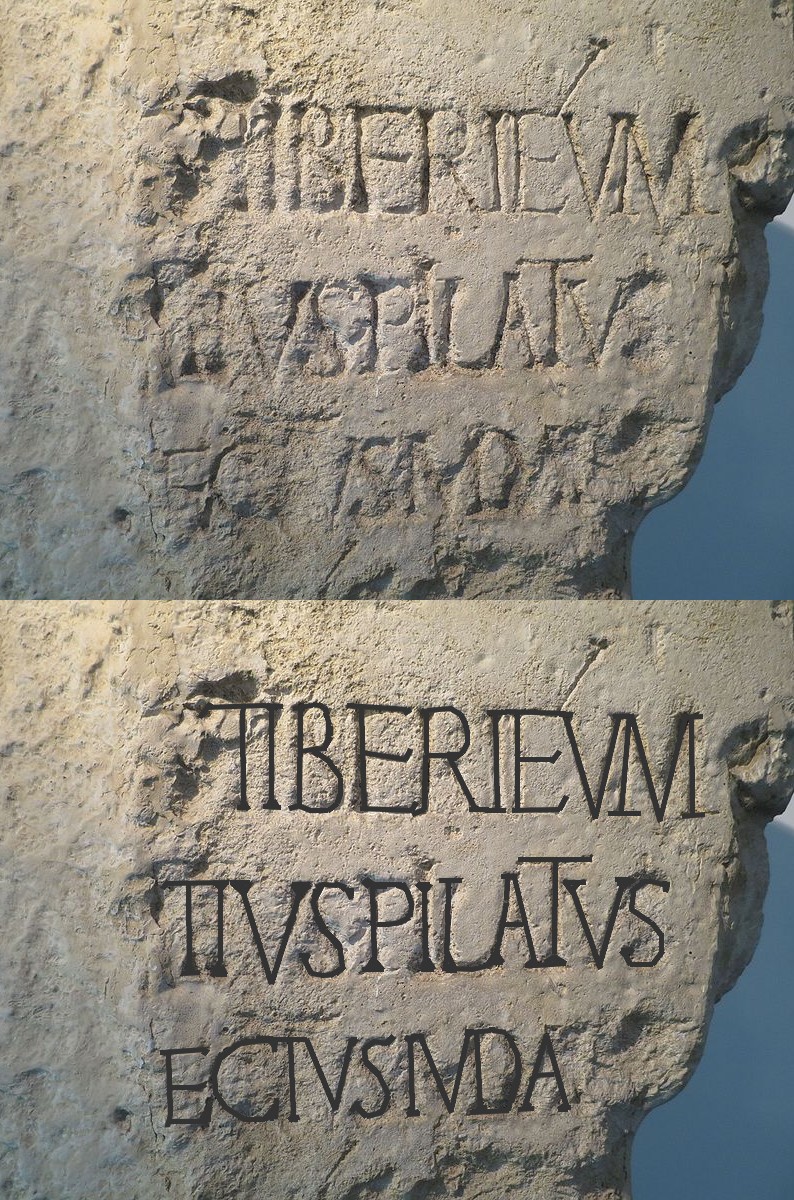

ಪಿಲಾತನು ತನ್ನ ಆಡಳಿತ ಕೇಂದ್ರವಾಗಿದ್ದ ಕೈಸರೈಯದಲ್ಲಿ ಒಂದು ಕಟ್ಟಡವನ್ನು ಚಕ್ರವರ್ತಿ ತಿಬೇರಿಯನಿಗೆ ಸಮರ್ಪಿಸಿದನು; ನಂತರದ ಕಟ್ಟಡಗಾರರು ಆ ಸಮರ್ಪಣಾ ಫಲಕವನ್ನು ರಂಗಮಂದಿರದಲ್ಲಿ ಮರುಬಳಸಿದ್ದರಿಂದಲೇ ಅದು ಉಳಿದುಕೊಂಡಿತು. ಮುರಿದ ಮೂರು ಲ್ಯಾಟಿನ್ ಸಾಲುಗಳು ಇಂದಿಗೂ “…ತಿಯುಸ್ ಪಿಲಾತುಸ್, ಯೂದಾಯದ ಪ್ರಿಫೆಕ್ಟ್” ಎಂದು ಓದುತ್ತವೆ. ಆ ವ್ಯಕ್ತಿಯ ಬಗ್ಗೆ ಇದುವರೆಗೆ ದೊರೆತಿರುವ ಏಕೈಕ ಶಾಸನ ಇದು, ಮತ್ತು ಇದು ಸುವಾರ್ತೆಗಳ ಪರವಾಗಿ ಒಂದು ಸಣ್ಣ ಅಂಶವನ್ನು ಇತ್ಯರ್ಥಗೊಳಿಸುತ್ತದೆ: ಅವನ ನಿಜವಾದ ಬಿರುದು ಪ್ರಿಫೆಕ್ಟ್ ಆಗಿತ್ತು — ಸುವಾರ್ತೆಗಳ ಸಾಮಾನ್ಯ ಪದವಾದ “ಅಧಿಪತಿ” ಇದಕ್ಕೆ ಹೊಂದುತ್ತದೆ — ಆದರೆ ನಂತರದ ರೋಮನ್ ಇತಿಹಾಸಕಾರರು ಕಾಲದೋಷದಿಂದ “ಪ್ರೊಕ್ಯುರೇಟರ್” ಎಂದು ಬರೆದರು.
- ಇದು ಏನು
- ಲ್ಯಾಟಿನ್ ಶಾಸನವುಳ್ಳ ಒಂದು ಸುಣ್ಣಕಲ್ಲಿನ ಕಟ್ಟಡ-ಸಮರ್ಪಣಾ ಫಲಕ, ಪ್ರಾಚೀನ ಕಾಲದಲ್ಲೇ ರಂಗಮಂದಿರದ ಮೆಟ್ಟಿಲಾಗಿ ಮರುಬಳಕೆಯಾದದ್ದು
- ವಸ್ತುವಿನ ಕಾಲ
- ಕ್ರಿ.ಶ. 26–36
- ಪತ್ತೆಯಾದದ್ದು
- ಇಸ್ರೇಲ್ನ ಕೈಸರೈಯ ಮ್ಯಾರಿಟಿಮಾದಲ್ಲಿನ ರೋಮನ್ ರಂಗಮಂದಿರ, 1961 (ಆಂಟೋನಿಯೊ ಫ್ರೋವಾ ಅವರ ಇಟಾಲಿಯನ್ ಉತ್ಖನನ)
- ಈಗ ಎಲ್ಲಿದೆ
- ಇಸ್ರೇಲ್ ವಸ್ತುಸಂಗ್ರಹಾಲಯ, ಯೆರೂಸಲೇಮ್ (ಕೈಸರೈಯದಲ್ಲಿ ಸ್ಥಳದಲ್ಲೇ ಪ್ರತಿಕೃತಿ)
- ಸಂಬಂಧಿಸಿರುವುದು
- ಯೇಸುವಿಗೆ ಶಿಕ್ಷೆ ವಿಧಿಸಿದ ರೋಮನ್ ಅಧಿಪತಿ ಪೊಂತ್ಯ ಪಿಲಾತನು
- ಶಾಸ್ತ್ರಗ್ರಂಥ
- ಮತ್ತಾಯನು 27 · ಲೂಕನು 3:1 · ಯೋಹಾನನು 18–19
ಈ ಶೋಧವು ತೋರಿಸುವುದುಪಿಲಾತನು ತಿಬೇರಿಯನ ಕೆಳಗೆ ಯೂದಾಯವನ್ನು ಆಳುತ್ತಿದ್ದ ರೋಮನ್ ಪ್ರಿಫೆಕ್ಟ್ ಆಗಿದ್ದನು — ವಿಚಾರಣೆಯ ಕಥನಗಳಿಗೆ ಸರಿಯಾದ ವ್ಯಕ್ತಿ, ಸರಿಯಾದ ಹುದ್ದೆ ಮತ್ತು ಸರಿಯಾದ ದಶಕ.
ಇದು ರುಜುವಾತುಪಡಿಸದಿರುವುದುಇದು ಹುದ್ದೆಯಲ್ಲಿದ್ದ ವ್ಯಕ್ತಿಯನ್ನು ದೃಢಪಡಿಸುತ್ತದೆ, ವಿಚಾರಣೆಯನ್ನಲ್ಲ: ಯೇಸುವಿನ ಬಗ್ಗೆಯಾಗಲಿ, ಒಂದು ತೀರ್ಪಿನ ಬಗ್ಗೆಯಾಗಲಿ, ಕೈ ತೊಳೆದುಕೊಂಡದ್ದರ ಬಗ್ಗೆಯಾಗಲಿ ಆ ಕಲ್ಲಿನ ಮೇಲೆ ಏನೂ ಇಲ್ಲ.
ಮೂಲಗಳು ಮತ್ತು ಹೆಚ್ಚಿನ ಓದು