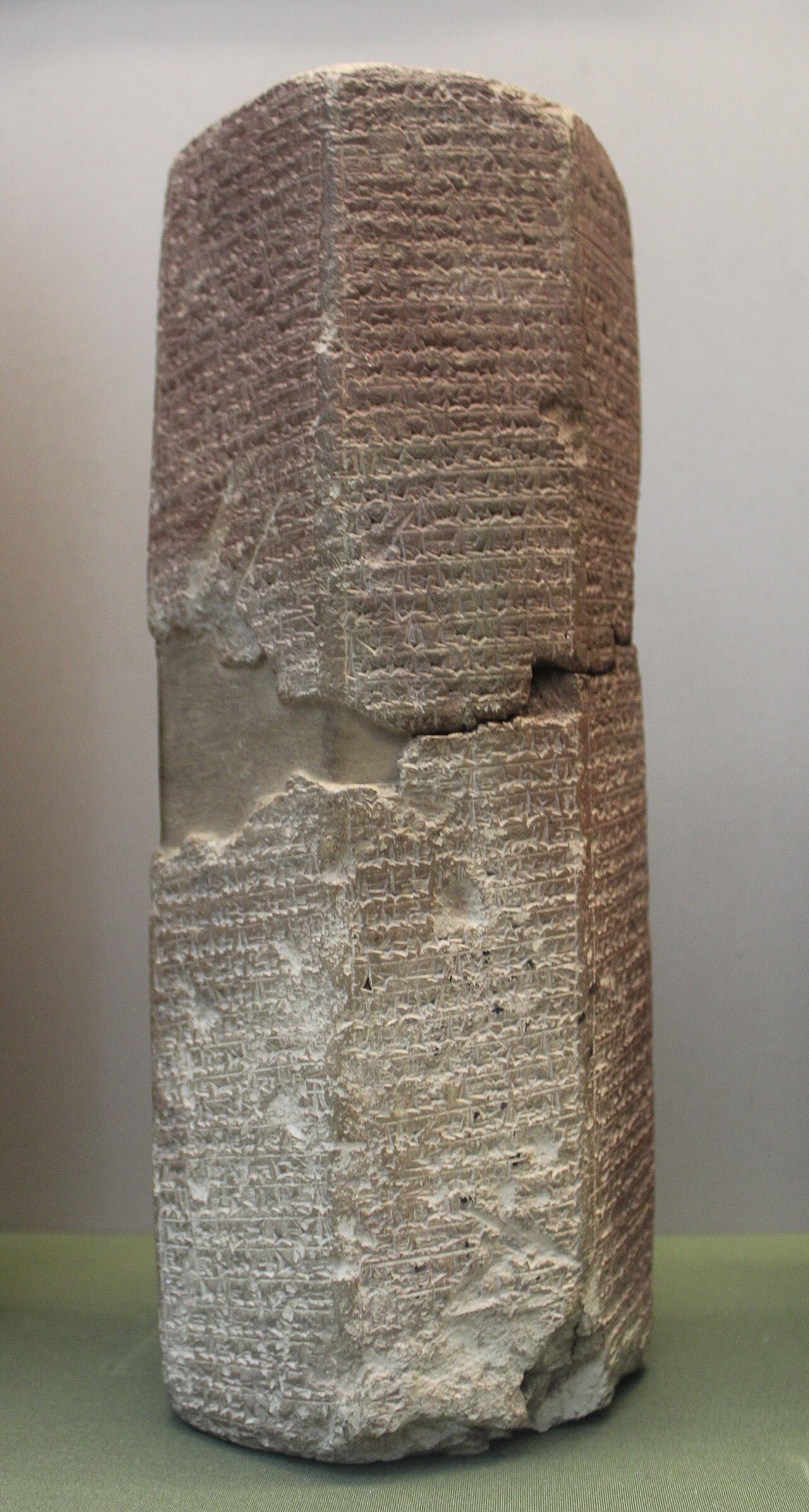

ತಮ್ಮ ನಿರ್ಮಾಣ ಯೋಜನೆಗಳಿಗೆ ಸಾಮಗ್ರಿಗಳನ್ನು ಒದಗಿಸುವಂತೆ ತಾವು ಒತ್ತಾಯಿಸಿದ ಸಾಮಂತರನ್ನು ಪಟ್ಟಿ ಮಾಡುತ್ತಾ, ಇಬ್ಬರು ಅಶ್ಶೂರದ ಅರಸರೂ 'ಯೆಹೂದದ ಅರಸನಾದ ಮನಸ್ಸೆ'ಯನ್ನು ಹೆಸರಿಸುತ್ತಾರೆ. ಇದು ಯೆಹೂದದ ಅಧಿಪತಿಗಳಿಂದ ಬಂದ ಒಂದು ಸಾಮಾನ್ಯ ಆಡಳಿತಾತ್ಮಕ ಉಲ್ಲೇಖ — ಬೈಬಲ್ ಅಶ್ಶೂರಕ್ಕೆ ಕಪ್ಪ ಕೊಡುವವನೆಂದು ವಿವರಿಸುವ, ದೀರ್ಘಕಾಲ ಆಳಿದ ಅದೇ ಅರಸನ ಬಗ್ಗೆ — ಮತ್ತು ಮನಸ್ಸೆಯನ್ನು ಸಂಕೋಲೆಗಳಿಂದ ಬಾಬೆಲಿಗೆ ಎಳೆದೊಯ್ಯಲಾಯಿತು ಎಂಬ ಪೂರ್ವಕಾಲವೃತ್ತಾಂತದ ಚಿತ್ರಣಕ್ಕೂ ಇದು ಹೊಂದಿಕೊಳ್ಳುತ್ತದೆ.
- ಇದು ಏನು
- ಕಪ್ಪ ಕೊಟ್ಟ ಸಾಮಂತ ಅರಸರನ್ನು ಪಟ್ಟಿ ಮಾಡುವ ಏಸರ್ಹದ್ದೋನ್ ಮತ್ತು ಅಶುರ್ಬಾನಿಪಾಲರ ಅಶ್ಶೂರದ ರಾಜಶಾಸನಗಳು (ಮಣ್ಣಿನ ಪ್ರಿಸಮ್ಗಳು); ಅವರಲ್ಲಿ ಯೆಹೂದದ ಮನಸ್ಸೆಯೂ ಇದ್ದಾನೆ
- ವಸ್ತುವಿನ ಕಾಲ
- ಕ್ರಿ.ಪೂ. 7ನೇ ಶತಮಾನದ ಮಧ್ಯಭಾಗ
- ಪತ್ತೆಯಾದದ್ದು
- ನಿನೆವೆಯ ಅರಮನೆ ದಾಖಲಾಗಾರಗಳು, ಇರಾಕ್ (ಲೇಯಾರ್ಡ್ ಮತ್ತು ರಸ್ಸಾಮ್ ಅವರ ಬ್ರಿಟಿಷ್ ವಸ್ತುಸಂಗ್ರಹಾಲಯದ ದಂಡಯಾತ್ರೆಗಳು)
- ಈಗ ಎಲ್ಲಿದೆ
- ಬ್ರಿಟಿಷ್ ವಸ್ತುಸಂಗ್ರಹಾಲಯ, ಲಂಡನ್
- ಸಂಬಂಧಿಸಿರುವುದು
- ಅಶ್ಶೂರದ ಸಾಮಂತನಾದ ಯೆಹೂದದ ಅರಸ ಮನಸ್ಸೆ
- ಶಾಸ್ತ್ರಗ್ರಂಥ
- 2 ಅರಸುಗಳು 21 · 2 ಪೂರ್ವಕಾಲವೃತ್ತಾಂತ 33:11
ಈ ಶೋಧವು ತೋರಿಸುವುದುಬೈಬಲ್ ಇರಿಸುವ ಕಾಲಘಟ್ಟದಲ್ಲೇ ಮನಸ್ಸೆಯು ಯೆಹೂದದ ನಿಜವಾದ ಅರಸನೂ ಅಶ್ಶೂರದ ಸಾಮಂತನೂ ಆಗಿದ್ದನು.
ಇದು ರುಜುವಾತುಪಡಿಸದಿರುವುದುಇದು ಅವನ ಅಸ್ತಿತ್ವವನ್ನೂ ಸಾಮಂತ ಸ್ಥಾನಮಾನವನ್ನೂ ದೃಢಪಡಿಸುತ್ತದೆ, 2 ಪೂರ್ವಕಾಲವೃತ್ತಾಂತ 33ರಲ್ಲಿರುವ ಅವನ ಪಶ್ಚಾತ್ತಾಪದ ವೃತ್ತಾಂತವನ್ನಲ್ಲ.
ಮೂಲಗಳು ಮತ್ತು ಹೆಚ್ಚಿನ ಓದು