टीका वर्तमान में केवल अंग्रेज़ी में उपलब्ध है। हिन्दी अनुवाद प्रगति पर है।
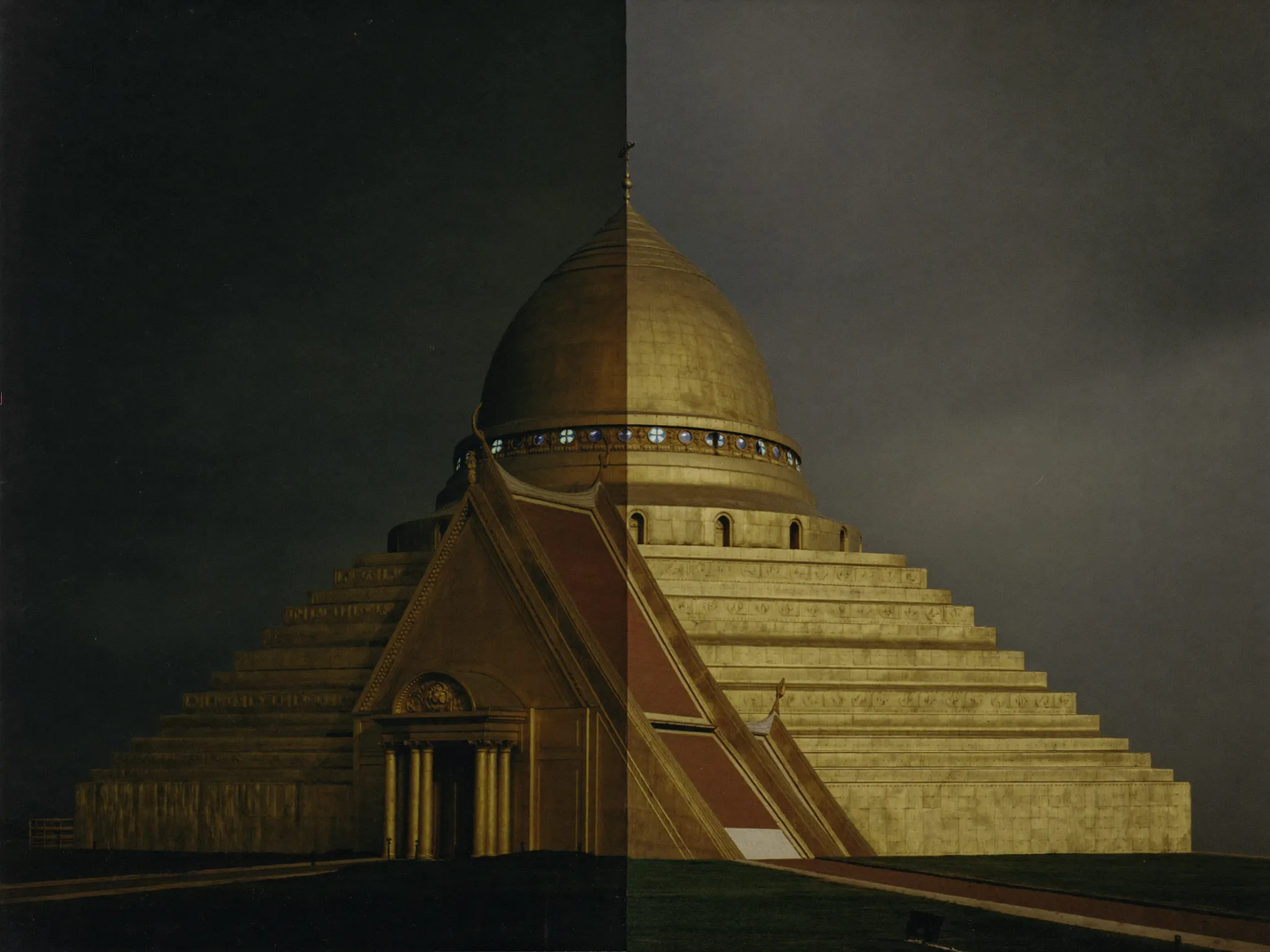
1 राजाओं 13 — O Altar, Altar — the Man of God from Judah
A man of God comes out of Judah by the word of the LORD to Bethel, as Jeroboam stands by the altar to burn incense. He cries against the altar: a child shall be born unto the house of David, Josiah by name, who will burn the priests of the high places upon it; and he gives a sign — the altar shall be rent. Jeroboam stretches out his hand, Lay hold on him, and the hand dries up; the altar is rent and the ashes poured out. At the king's plea the man of God prays and the hand is restored, but he refuses the king's reward: he was charged to eat no bread, drink no water, and not return by the same way. An old prophet of Bethel rides after him, finds him under an oak, and says an angel spake unto him — but he lied — and brings him back to eat. At the table the word of the LORD comes to the old prophet: thy carcase shall not come unto the sepulchre of thy fathers. On the road a lion slays him, and the ass and the lion stand by the body. The old prophet buries him in his own grave and mourns, Alas, my brother! Yet Jeroboam returns not from his evil way.
“And he cried against the altar in the word of the LORD, and said, O altar, altar, thus saith the LORD; Behold, a child shall be born unto the house of David, Josiah by name; and upon thee shall he offer the priests of the high places that burn incense upon thee, and men’s bones shall be burnt upon thee.”
— 1 राजाओं 13:2
- v.1-10 A man of God at Bethel — O altar, altar; Josiah by name; the withered hand; eat no bread
- v.11-19 The old prophet of Bethel — I am a prophet also; an angel spake unto me; but he lied
- v.20-25 The word at the table; a lion by the way; the ass and the lion stand by the carcase
- v.26-32 Alas, my brother! — buried in the old prophet's grave; lay my bones beside his bones
- v.33-34 Jeroboam returned not from his evil way; a sin to cut off his house
He put forth his hand from the altar, saying, Lay hold on him. And his hand, which he put forth against him, dried up. The hand stretched out to seize God's messenger cannot be drawn back. At the same moment the sign is given: The altar also was rent, and the ashes poured out from the altar (v. 5). In one scene the king's power and the king's altar are both shown to be helpless before the word of the LORD. Psalm 105:15 says of God's servants, Touch not mine anointed, and do my prophets no harm.
Intreat now the face of the LORD thy God, and pray for me (v. 6). Notice thy God: Jeroboam asks for prayer but keeps his distance. The man of God prays, and the king's hand was restored him again. Mercy is given at once to the man who had just tried to seize him; the prophet does not repay hostility with a curse. Yet healing does not bring repentance — verse 33 will say that Jeroboam returned not from his evil way. Readers may recall Pharaoh, who asked Moses to Intreat the LORD for him and then hardened his heart once there was respite (Exodus 8:8, 15).
Come home with me, and refresh thyself, and I will give thee a reward (v. 7). The offer is an invitation into the king's fellowship, in the very place the prophet has just condemned. His answer is firm: If thou wilt give me half thine house, I will not go in with thee (v. 8). He gives his reason: For so was it charged me by the word of the LORD. To eat at Bethel would be to share a table with what God had judged. Many read the command as making the messenger part of the message: Bethel was under judgment, and he must not treat it as a place of welcome or linger on its roads.
So he went another way, and returned not by the way that he came to Bethel (v. 10). So far he obeys in every detail. Balaam had once said, If Balak would give me his house full of silver and gold, I cannot go beyond the word of the LORD (Numbers 22:18), and still stumbled later. The man of God refuses a king's reward with ease. The test that undoes him will come in a gentler form: not a king's bribe but a fellow prophet's invitation. The commands are simple and clear; what follows turns on whether he will keep them when another voice claims to speak for God.
Now there dwelt an old prophet in Bethel (v. 11). He hears from his sons what happened, has the ass saddled, and finds the man of God sitting under an oak (v. 14). The invitation is given again, and the refusal repeated almost word for word (vv. 16-17). Then: I am a prophet also as thou art; and an angel spake unto me by the word of the LORD. The narrator does not leave the reader in doubt: But he lied unto him. The text gives no motive. Some suggest he wanted the honour of the visitor's company, or meant to test him; the study leaves it unexplained, as Scripture does.
The man of God had a direct word from the LORD; against it he was offered a claimed word, passed on second-hand, from an angel. He took the second over the first. Paul would write, though we, or an angel from heaven, preach any other gospel unto you than that which we have preached unto you, let him be accursed (Galatians 1:8), and John, believe not every spirit, but try the spirits whether they are of God (1 John 4:1). A word that contradicts what God has plainly said does not become true by coming from a prophet or being credited to an angel.
As they sat at the table... the word of the LORD came unto the prophet that brought him back (v. 20). The liar becomes the bearer of a true word. Thou hast disobeyed the mouth of the LORD... thy carcase shall not come unto the sepulchre of thy fathers (vv. 21-22). To be buried away from one's family tomb was a grievous thing in Israel's eyes. The word of judgment speaks only of the guest's disobedience, not of the host's lie. After the meal the old prophet saddles the ass for him and sends him on his way (v. 23).
This is the hard centre of the chapter, and the study does not smooth it. The deceived man dies; the deceiver lives, and the narrator records no punishment for the lie. Readers have answered in different ways: that the man of God had heard the command himself and had just repeated it (v. 17), so he should have held to it; that one carrying a public sign is held to stricter account (compare James 3:1); that the old prophet's grief was itself a reckoning. None removes the difficulty entirely, and the text does not try. What it does make plain is that God's word stands, even when a liar is made to speak it.
A lion met him by the way, and slew him: and his carcase was cast in the way, and the ass stood by it, the lion also stood by the carcase. The scene is unnatural on purpose. A lion that kills and then neither eats the body nor touches the ass (v. 28) is not behaving as lions do. Men passing by see it and tell it in the city (v. 25). The narrator means the reader to see that this was no chance accident on a road: the beast is held, as it were, under orders, standing guard until the body is fetched.
Lions appear elsewhere in Kings as instruments of judgment: in 20:36 a man who hast not obeyed the voice of the LORD is killed by a lion as soon as he departs, and in 2 Kings 17:25 the LORD sent lions among the settlers of Samaria. Here the stillness of lion and ass makes a quiet point: the judgment was measured. It took the man's life, as the word had said, but went no further — not the ass, and not the body. Readers have seen a kind of mercy in that restraint, for the man of God would at least be buried, though not with his fathers.
He laid his carcase in his own grave; and they mourned over him, saying, Alas, my brother! (v. 30). The deceiver mourns the man he deceived with what seems real grief, and still calls him the man of God (v. 26). Then he gives his sons his last wish: bury me in the sepulchre wherein the man of God is buried; lay my bones beside his bones. His reason: the saying which he cried by the word of the LORD against the altar in Bethel... shall surely come to pass (v. 32). The old prophet who undid the messenger still believes the message.
The wish bears fruit in 2 Kings 23:17-18. Josiah, burning bones on the Bethel altar, sees a marker and asks, What title is that that I see? Told it is the sepulchre of the man of God, which came from Judah, he commands, let no man move his bones. So they let his bones alone, with the bones of the prophet that came out of Samaria. The old prophet's bones were spared because they lay beside the true messenger's. Verse 32 speaks of the cities of Samaria, though the city of Samaria is founded only in 16:24; many take this as the narrator using the later name of the region.
After this thing Jeroboam returned not from his evil way. He had seen his altar split, his hand wither and be healed, and a prophecy naming the king who would undo his work. None of it turned him. Instead he made again of the lowest of the people priests of the high places: whosoever would, he consecrated him. The Hebrew behind consecrated is literally to fill the hand, an idiom for ordaining priests (compare Exodus 28:41). Wonders do not by themselves change a heart that has decided; Jesus said, neither will they be persuaded, though one rose from the dead (Luke 16:31).
And this thing became sin unto the house of Jeroboam, even to cut it off, and to destroy it from off the face of the earth (v. 34). The phrase recalls 12:30, this thing became a sin; now its cost is named. The promise of 11:38 — if thou wilt hearken... I will be with thee, and build thee a sure house — has been answered by Jeroboam's choices. The next chapter announces the end of his house, and 15:29 records it. The study notes the narrator's pattern: the word is given, warning follows, and only then the judgment.
This chapter will not let you obey God only when an enemy opposes you. The man of God refused a king easily; he fell to a friendly voice that claimed to speak for God. When someone tells you that God has changed what He plainly said — even someone with a title, a reputation, or a story of an angel — test it by the word you already have. Be slow to set aside a clear command because a respected person offers you a softer path. Notice Jeroboam too: he saw a sign, received mercy, and went on as before. A healed hand did not mean a changed heart. If God has spoken to you plainly, hold to it, and do not wait for more wonders before you turn.
The church has read this chapter as pointing beyond itself, and the study offers that as a reading. A true messenger refuses the king's table and is then turned aside by another voice. Christians see the contrast in Christ, who when tempted answered from Scripture, It is written (Matthew 4:4, 7, 10), and who said, I came down from heaven, not to do mine own will, but the will of him that sent me (John 6:38). The man of God died away from his fathers' tomb for his own disobedience; Christ was laid in a tomb not His own for the sins of others (Matthew 27:59-60), and rose. And the word against Bethel's altar, fulfilled by a son of David, has been read as a shadow of the greater Son of David who brings false worship to an end.
इस पृष्ठ पर आपकी भाषा में पवित्रशास्त्र का पाठ: इंडियन रिवाइज़्ड वर्ज़न (IRV), © 2017, 2019 ब्रिज कनेक्टिविटी सॉल्यूशंस — बिना बदलाव के इस लाइसेंस के अंतर्गत प्रयुक्त: CC BY-SA 4.0 · eBible.org
There came a man of God out of Judah by the word of the LORD unto Bethel: and Jeroboam stood by the altar to burn incense (v. 1). The king is at his own feast, at the altar of 12:32-33, when an unnamed man from the southern kingdom arrives. He speaks not to the king but to the altar: O altar, altar, thus saith the LORD. The word names a king of David's line who will burn on this very altar the priests of the high places and men's bones. To Jeroboam, who set up Bethel to keep the tribes from Jerusalem, the point is sharp: the house of David will outlast his altar.
The text itself makes the link to 2 Kings 23:15-16, where Josiah broke down the altar that was at Bethel, took bones out of the sepulchres, and burned them upon the altar... according to the word of the LORD which the man of God proclaimed. Readers differ over the naming of Josiah long before his birth. Many take it as genuine prediction, comparing Isaiah 44:28, which names Cyrus; others think the name reflects the shaping of the account in or after Josiah's day. The study presents both views and does not settle the question. Either way, the narrator wants the reader to see that the word against Bethel did not fail.