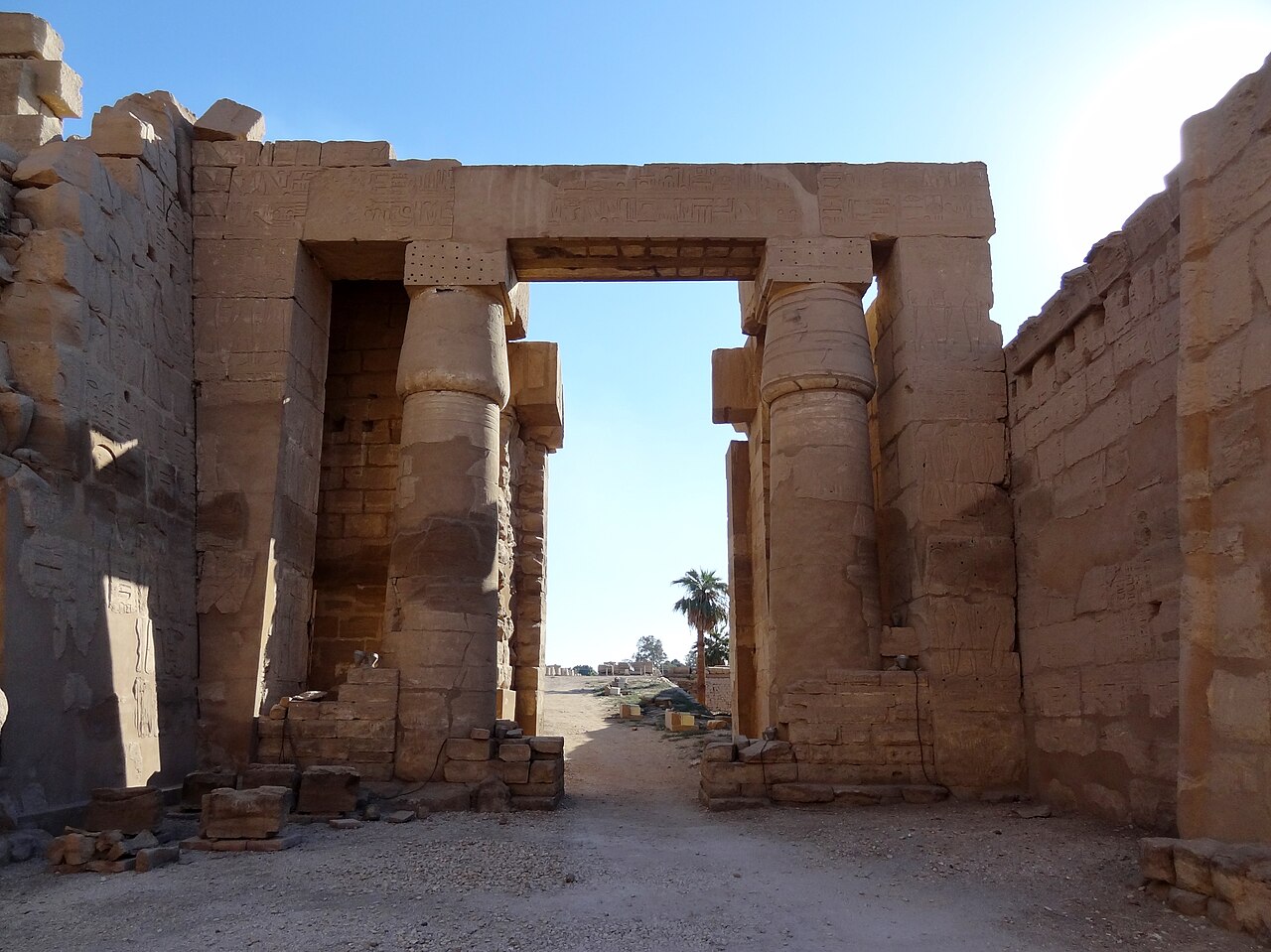

राजाओं की पुस्तक बताती है कि सुलैमान के पुत्र रहूबियाम के पाँचवें वर्ष में मिस्र का राजा शीशक चढ़ आया और यरूशलेम के भवन और राजमहल का खज़ाना ले गया। कर्नक की एक विशाल दीवार पर फ़िरौन शोशेंक प्रथम (बाइबल का शीशक) ने उस अभियान का अपना अभिलेख छोड़ा: आमोन देवता उसे बंदी नगरों की पंक्तियाँ सौंपता है, हर एक पर एक फ़िलिस्तीनी स्थान-नाम अंकित है — सौ से कहीं अधिक, जो नेगेव से लेकर उत्तर तक फैले हैं। शोशेंक द्वारा खड़े किए गए एक विजय-स्मारक का टूटा हुआ टुकड़ा तो स्वयं मगिद्दो के खंडहरों से भी खोदकर निकाला गया।
- यह क्या है
- कर्नक के मंदिर में बुबास्ती द्वार पर एक विजय-चित्र और नगरों की भौगोलिक सूची, साथ ही मगिद्दो में मिला एक विजय-स्तंभ का टुकड़ा
- वस्तु की तिथि
- लगभग 925 ईसा पूर्व
- खोज
- कर्नक, थीब्स, मिस्र (उभरा चित्र); मगिद्दो, इस्राएल (स्तंभ का टुकड़ा), 1926 (उभरा चित्र बहुत समय से ज्ञात है; मगिद्दो का टुकड़ा ओरिएंटल इंस्टिट्यूट के अभियान को मिला)
- अब यह कहाँ है
- उभरा चित्र कर्नक में यथास्थान; मगिद्दो का टुकड़ा संग्रहालय-संग्रहों में
- संबंधित
- रहूबियाम के शासनकाल में फ़िरौन शीशक का यहूदा पर आक्रमण
- पवित्र-वचन
- 1 राजाओं 14:25–26 · 2 इतिहास 12:1–9
यह खोज क्या दिखाती हैएक मिस्री फ़िरौन, शोशेंक प्रथम, ने लगभग 925 ईसा पूर्व इस्राएल और यहूदा में अभियान चलाया — उसी राजा और उसी धावे का एक स्वतंत्र मिस्री अभिलेख, जिसे राजाओं की पुस्तक रहूबियाम के शासनकाल में रखती है, और जो विभाजित राजतंत्र के कालक्रम को एक ठोस आधार देता है।
यह क्या सिद्ध नहीं करतीशोशेंक की बची हुई सूची में यरूशलेम का नाम नहीं है, इसलिए भवन के खज़ाने के लूटे जाने का विशिष्ट विवरण बाइबली वृत्तांत पर ही टिका है; दोनों अभिलेख अभियान के स्तर पर मेल खाते हैं, हर विवरण के स्तर पर नहीं।
स्रोत एवं आगे पढ़ने के लिए