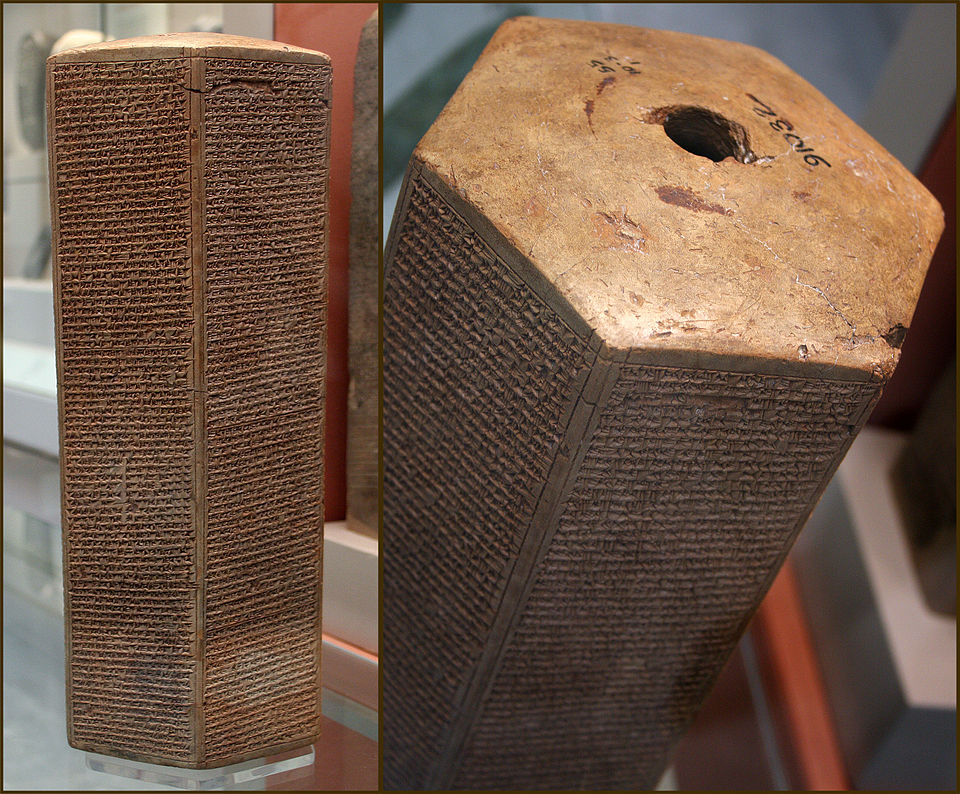

सन्हेरीब का अपना इतिवृत्त नगर-नगर यहूदा में उसकी विजयों की डींग मारता है: छियालीस शहरपनाह वाले नगर जीते गए, भारी लूट मिली, और हिजकिय्याह यरूशलेम में “पिंजरे में बंद पक्षी की तरह” बंद कर दिया गया। फिर डींग चुप हो जाती है। अश्शूरी राजा कभी हार स्वीकार नहीं करते थे, पर किसी नगर पर क़ब्ज़े को वे सदा दर्ज करते थे — और यरूशलेम के लिए ऐसा कोई अभिलेख नहीं है। प्रिज़्म कर का दावा करता है; बाइबल भी कर की बात बताती है, और एक ऐसी घेराबंदी की जो नगर के खड़े रहते ही समाप्त हो गई। निर्णायक बिंदु पर शत्रु की चुप्पी और बाइबल की कहानी सहमत हैं।
- यह क्या है
- पकी मिट्टी का छह-पहलू वाला प्रिज़्म, जिस पर कीलाक्षर लिपि में सन्हेरीब के अभियानों का आधिकारिक अभिलेख है
- वस्तु की तिथि
- लगभग 691 ईसा पूर्व
- खोज
- नीनवे, इराक, 1830 (कर्नल रॉबर्ट टेलर द्वारा प्राप्त; इसकी प्रतियाँ शिकागो और यरूशलेम में)
- अब यह कहाँ है
- ब्रिटिश संग्रहालय, लंदन
- संबंधित
- 701 ईसा पूर्व में राजा हिजकिय्याह के समय यरूशलेम की घेराबंदी
- पवित्र-वचन
- 2 राजाओं 18–19 · यशायाह 36–37
यह खोज क्या दिखाती हैसन्हेरीब ने 701 ईसा पूर्व में यहूदा पर आक्रमण किया, उसके नगरों को उजाड़ा, हिजकिय्याह से भारी कर वसूला — और यरूशलेम को नहीं जीता।
यह क्या सिद्ध नहीं करतीघेराबंदी क्यों समाप्त हुई, यह पुरातत्त्व की पहुँच से बाहर है। बाइबल इसका कारण यहोवा के दूत को बताती है; इतिहासकार महामारी, राजनीति या धन देकर लौटाए जाने पर विचार करते हैं। प्रिज़्म परिणाम की पुष्टि कर सकता है, कारण की नहीं। (इसके “46 नगर” और बंदियों की संख्याएँ भी संभवतः बढ़ा-चढ़ाकर बताई गई हैं।)
स्रोत एवं आगे पढ़ने के लिए