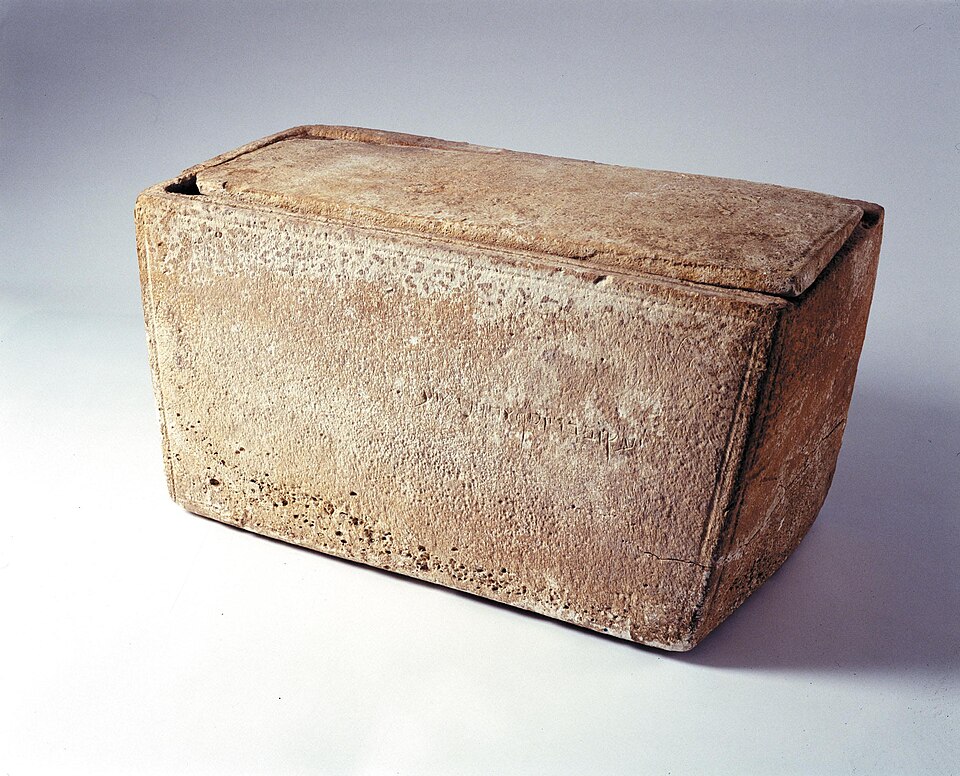

हम इस प्रसिद्ध वस्तु को इस पाठ के रूप में शामिल करते हैं कि इस क्षेत्र का ईमानदार पक्ष कैसे काम करता है। पेटी सचमुच प्राचीन है; प्रश्न शिलालेख का है, और सबसे बढ़कर उसके अंतिम वाक्यांश “यीशु का भाई” का। चूँकि इस अस्थि-पात्र की कभी खुदाई नहीं हुई — यह एक निजी संग्रह से प्रकट हुआ — कोई प्राप्ति-स्थल इसकी गवाही नहीं दे सकता। इस्राएल के पुरावशेष प्राधिकरण ने इस वाक्यांश को आधुनिक जोड़ घोषित किया; एक लंबा जालसाज़ी-मुक़दमा दोषमुक्ति में समाप्त हुआ, पर प्रामाणिकता स्थापित नहीं हुई; विशेषज्ञ अब भी बँटे हुए हैं। तीनों नाम उस युग के सबसे सामान्य नामों में से थे।
- यह क्या है
- चूना-पत्थर की एक अस्थि-पेटी जिस पर अरामी शिलालेख है: “याकूब, यूसुफ़ का पुत्र, यीशु का भाई”
- वस्तु की तिथि
- पहली शताब्दी ईस्वी (स्वयं पेटी; विवाद शिलालेख के दूसरे भाग को लेकर है)
- खोज
- अज्ञात — यह बिना किसी खुदाई-अभिलेख के पुरावस्तु-बाज़ार में सामने आया, 2002 में प्रचारित
- अब यह कहाँ है
- निजी संग्रह, तेल अवीव
- संबंधित
- यीशु के भाई याकूब, यरूशलेम की कलीसिया के अगुवे — यदि शिलालेख प्रामाणिक है
- पवित्र-वचन
- मरकुस 6:3 · गलातियों 1:19 · प्रेरितों के काम 15
यह खोज क्या दिखाती हैप्रमाण के रूप में बहुत कम: बिना ज्ञात उद्गम वाली वस्तु ऐतिहासिक भार नहीं उठा सकती, उसका पाठ कितना भी नाटकीय क्यों न हो। (याकूब का अस्तित्व पौलुस, सुसमाचारों और योसेफ़स पर सुरक्षित रूप से टिका है — इस पेटी पर नहीं।)
यह क्या सिद्ध नहीं करतीयदि पूरा शिलालेख प्राचीन हो, तब भी यह नहीं दिखाया जा सकता कि यह नासरत के यीशु की ओर संकेत करता है — यूसुफ़, यीशु और याकूब, तीनों सामान्य नाम थे।
विवादित: शिलालेख के दूसरे वाक्यांश की प्रामाणिकता एक खुला विद्वत्तापूर्ण विवाद है; हर गंभीर विवेचन इसे चिह्नित करता है। हम इसे ठीक इसीलिए सूचीबद्ध करते हैं क्योंकि यह प्रसिद्ध है — और अनसुलझा है।
स्रोत एवं आगे पढ़ने के लिए