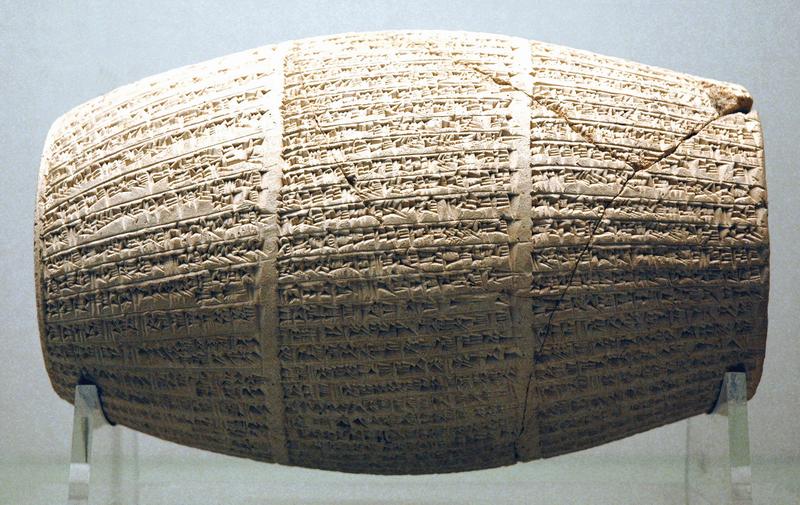

শতাব্দীর পর শতাব্দী দানিয়েলের বিরুদ্ধে সংশয়বাদীদের হাতে একটি জোরালো যুক্তি ছিল: কোনো প্রাচীন ইতিহাসবিদ — না হেরোডোটাস, না জেনোফন — বেলশৎসর নামে কোনো বাবিলীয় শাসকের কথা জানতেন না; শেষ রাজা ছিলেন নবোনিডাস। তারপর নবোনিডাসের নিজেরই ভিত্তি-সিলিন্ডার পাওয়া গেল, যার একটি প্রার্থনা শেষ হয়েছে 'আমার প্রথমজাত পুত্র বেলশৎসর'-এর জন্য একটি মিনতি দিয়ে। পরে অন্যান্য ফলক দেখাল যে নবোনিডাস বহু বছর বিদেশে ছিলেন, আর তাঁর জায়গায় বেলশৎসর বাবিল চালাতেন। যে নাম কেবল দানিয়েলে সংরক্ষিত ছিল এবং টিকে থাকা সাহিত্যের আর কোথাও ছিল না, তা প্রকৃত রাজদরবারের স্মৃতি বলে প্রমাণিত হলো।
- এটি কী
- বাবিলের রাজা নবোনিডাসের একটি মাটির ভিত্তি-সিলিন্ডার, কিউনিফর্ম লিপিতে
- নিদর্শনের কাল
- আনু. খ্রিস্টপূর্ব 550
- আবিষ্কার
- ঊরে চাঁদ-দেবতার মন্দির, ইরাক, 1854 (জে. জি. টেলরের অভিযান)
- এখন কোথায় আছে
- ব্রিটিশ মিউজিয়াম, লন্ডন
- সম্পর্কিত
- বেলশৎসর, দানিয়েল পুস্তকে বাবিলের পতনের সময়কার শাসক
- ধর্মশাস্ত্র
- দানিয়েল 5
এই আবিষ্কার যা দেখায়বেলশৎসর বাস্তবে ছিলেন এবং যুবরাজ হিসেবে কার্যত বাবিল শাসন করতেন — যা দানিয়েলের সেই খুঁটিনাটিরও এক অদ্ভুত অর্থ দাঁড় করায় যে প্রস্তাবিত পুরস্কার ছিল রাজ্যে তৃতীয় স্থান, তাঁর উপরের দুজনের পরে।
এটি যা প্রমাণ করে নাবাবিলীয় নথিপত্র কখনও বেলশৎসরকে 'রাজা' বলে না, এবং দানিয়েল তাঁকে নবূখদ্নিৎসরের 'পুত্র' বলেন (জানা কোনো বংশতালিকায় তিনি তাঁর বংশধর ছিলেন না) — এই বিষয়গুলি সমালোচকেরা এখনও তোলেন; এবং কোনো ফলক কোনো ভোজ, কোনো হাত বা দেওয়ালের লেখার কথা উল্লেখ করে না।
সূত্র ও আরও পাঠ